

Biographical sports films often arrive already weighed down by expectation — by legacy, mythology, and the audience’s prior knowledge of how the story ends. Giant understands this burden, and instead of charging headlong toward glory, it pauses to examine the pressure that precedes it.
“Greatness is forged long before the crowd learns your name.”
Set during the formative years of British boxing icon Prince Naseem Hamed, Giant is not positioned as a full cradle-to-career biopic. Rather, it focuses on a crucial developmental period — the making of a fighter before he became a global phenomenon.
A Story About Becoming, Not Winning
What immediately distinguishes Giant is its restraint. The film avoids the temptation to mythologise success through belts and statistics. Instead, it frames boxing as a psychological and cultural crucible — a space where identity, discipline, ego, and belief collide.
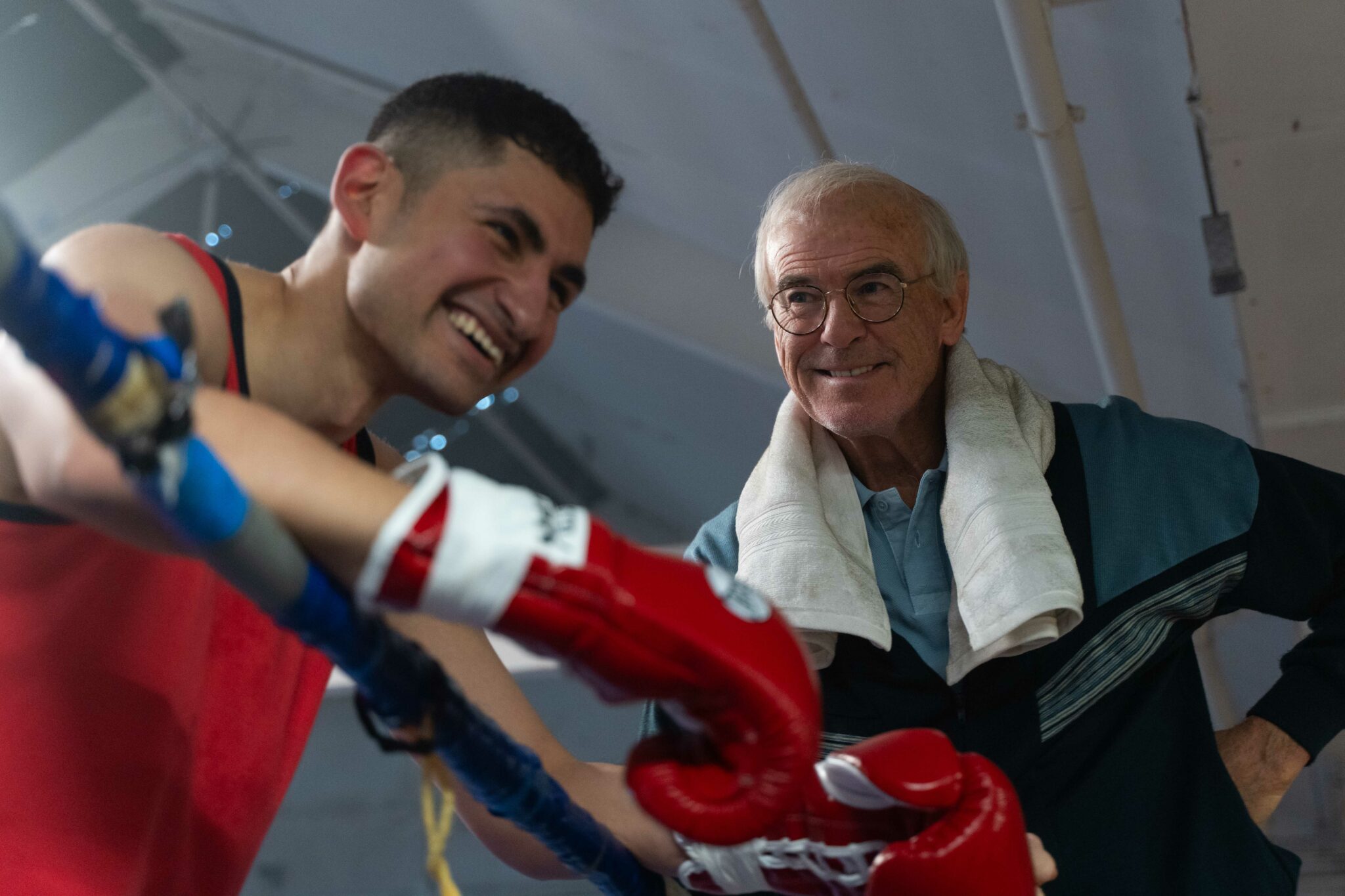
The narrative centres on Hamed’s early career and his defining relationship with trainer Brendan Ingle, a partnership that shaped not only his fighting style but his worldview. This dynamic forms the emotional spine of the film, grounding the story in mentorship, trust, and conflict rather than spectacle.
Performance & Character
Amir El-Masry steps into the role of Prince Naseem Hamed with a performance that favours emotional credibility over imitation. Rather than chasing surface-level swagger, he captures the tension beneath it — the doubt, hunger, and volatility of a young athlete navigating fame, faith, and expectation simultaneously.
The performance is intentionally internalised. Confidence is present, but edged with fragility, reinforcing the film’s central idea: that self-belief is something constructed, not inherited.
Direction & Visual Language
Directed by Rowan Athale, Giant adopts a grounded, character-first visual approach. Boxing scenes are framed with physical realism rather than flamboyance, emphasising movement, breath, and consequence. The camera often remains close, reinforcing the pressure surrounding its protagonist.
Moments of silence are allowed to breathe. Emotional beats are trusted to land without editorial or musical overstatement — a confidence that many biopics lack.
Identity, Faith, and Belonging
Beyond sport, Giant explores cultural identity and belonging within Britain during the 1990s. These elements are woven naturally into character and context rather than foregrounded as statements, allowing the film to comment without sermonising.
Crucially, the film does not attempt to define Prince Naseem Hamed’s entire legacy. It presents a chapter — not a verdict — avoiding the common biopic trap of retrospective simplification.
Final Verdict
Giant is a measured, intelligent biographical drama that understands restraint as a strength. By focusing on the emotional and psychological foundations of greatness, it offers a thoughtful counterpoint to louder, more conventional sports films.
This is not a victory lap. It is the moment before the leap.
Verdict Summary
- Performances: 8/10
- Direction: 8/10
- Score: 7/10
- Cinematography: 8/10
- Overall: 8/10