
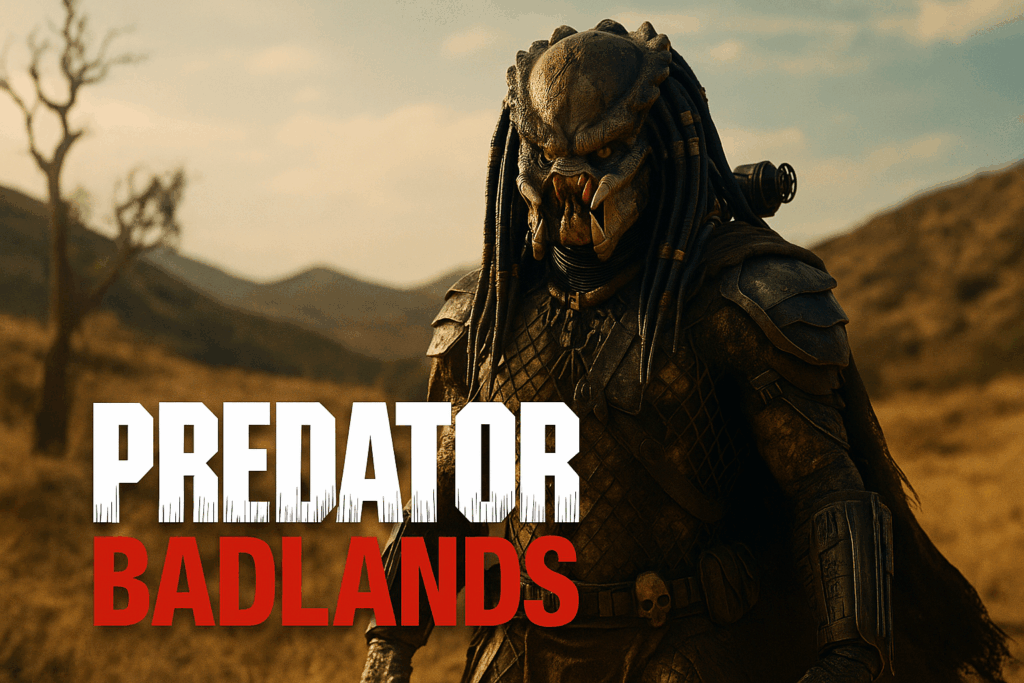
Directed by Dan Trachtenberg and starring Elle Fanning and Dimitrius Schuster‑Koloamatangi, this bold new chapter transforms the Yautja mythos. Here’s what works—and what still bites.
★ 7.5 / 10
Star Rating: 7.5 out of 10
Opening Fire
If you thought the Predator saga was down to muscle-bound hunters stalking humans in the jungle, think again. In “Predator: Badlands”, the hunt moves to a completely new terrain—an alien wilderness of ice and fire, with no humans in sight. The franchise reinvents itself with nervy swagger and surreal visuals, and under Trachtenberg’s direction it has morphed into something far stranger and more ambition-driven than you may expect.
Setting the Scene—Planet Genna & a Predator on the Ropes
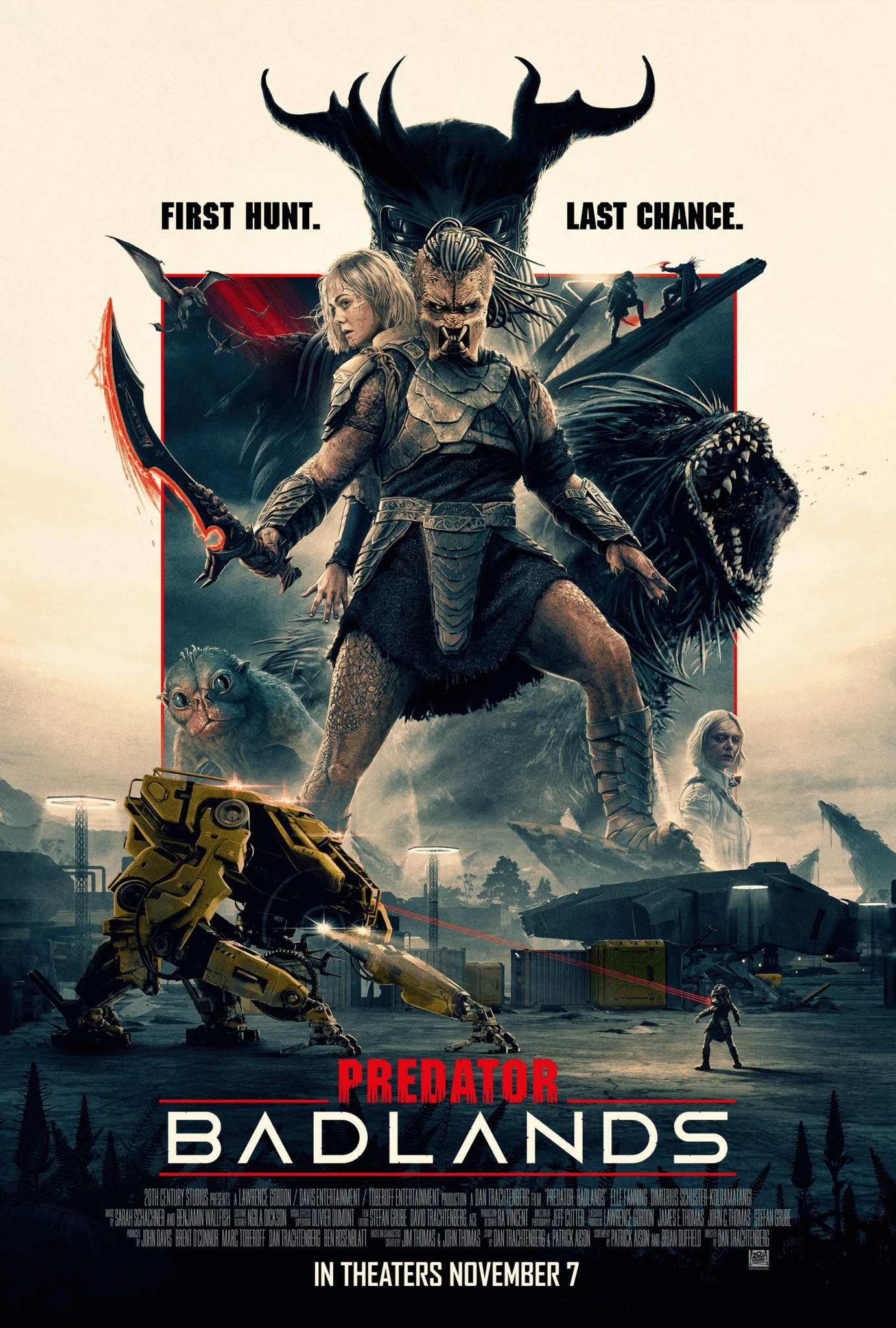
We enter the Yautja world through the eyes of Dek (Schuster-Koloamatangi), a young Predator outcast trying to redeem his worth. His mission? To take down the ultimate apex Predator—the Kalisk. On the planet Genna, where wastelands meet razor-sharp cliffs and the alien fauna outnumber the hunter, the film sets a savage, almost mythic tone.
Opposite Dek is Thia (Fanning), a half-android bounty-hunter from the Weyland-Yutani empire. Their alliance is uneasy, their language is broken, and yet their bond becomes the emotional core of the film. Fanning’s performance adds unexpected warmth and quirk to the brutal proceedings.
Direction & Cinematography: Gorgeously Brutal
Trachtenberg (whose previous franchise entry earned high praise) elevates the visual game yet again. The palette is icy-blue against crimson splatter, the camera glides through Predator lairs and alien burial grounds. Cinematographer Jeff Crofford frames the skull-trophies, the double-mandible snaps, the synthetic limbs of Thia in horrifying ballet, and all of it feels fresh—even within the beaten-path genre.
The absence of humans allows a new kind of terror: flora that hunts you, predator tribes that treat you as prey, androids with a post-human voice. Without the usual jungle setting, the film crafts a new “badlands” aesthetic that feels like Predator meets Blood Meridian by Cormac McCarthy.
Performances: Alien Hunters & Mutable Empathy
Schuster-Koloamatangi’s Dek rarely utters a full sentence, but in his growls, his silent glances, you can feel the film funneling his guilt and ambition. Fanning, meanwhile, brings the oddball charisma—her dual-bodied android is part carnivore, part comic relief, and entirely magnetic.
Supporting cast—mostly unseen humans—give way to alien voices and creature FX. It’s a bold move from a franchise built on predator-versus-soldier; here, the Predator is the protagonist. The result: you’re rooting for the hunter, but you never lose the scent of danger.
Tonal Shift: More Heart, Same Teeth
Make no mistake: the violence is still there—limbs flying, skull trophies, mandibles snapping—but the motion is faster, the color richer, the stakes both personal and cosmic. The film still has the Predator franchise’s DNA, but it’s now tempered by a sense of pathos, of heroism and betrayal layered under the alien skin.
Some long-time fans may balk at the softer edges: when your big monster film makes you care about the alien’s sense of shame or loyalty, you’re in unusual territory. That said, this emotional undercurrent gives the spectacle purpose.
Predator: Badlands Featurettes Part 1
Pacing & Structure
At 1h 47m, “Badlands” is brisk—there’s no needless setup, no human military base dragging the middle act. From scene one you’re dropped into the hunt, and it keeps accelerating. The structure divides roughly into three phases: exile, alliance, apex confrontation. The third act’s beast-on-beast finale is pure blockbuster carnage, yet emotionally grounded.
Some structural shortcuts are visible: the script skips certain Predator cultural conventions fans expect, and some plot threads (e.g., Dek’s clan politics) get minimal screen-time. But for a film that could easily have ballooned into a two-hour epic, the lean focus works in its favour.
Thematic Depth & Franchise Legacy
Underneath the claws and alien skulls lies a surprising meditation on hierarchy, shame and redemption. Dek’s exile mirrors our own outsider narratives; Thia’s fractured body and identity echo modern anxieties about the human/tech interface.
As part of the Predator canon, “Badlands” exists in conversation with the 1987 original, the 2022 “Prey”, and even the recent animated “Killer of Killers”. It honours the trophy-hunt mythology, but shifts the perspective: from humans as prey, to Predators as heroes. It’s a bold direction that may divide purists—but it also reinvigorates.
Predator Badlands Featurette Part 2
What Works
- Visually breathtaking: world-building, creature design and cinematography are top tier.
- Strong performances by Fanning & Schuster-Koloamatangi, elevating alien empathy.
- Refocused pace and leaner runtime make it accessible and punchy.
- Tonal ambition: mixes brutal action with genuine emotional stakes.
What Doesn’t
- Some franchise-fans will resist the shift away from humans and jungle settings.
- Plot threads (clan politics, Predator culture) are occasionally skimmed rather than explored.
- PG-13 rating limits the ultra-vicious edge some expect from the brand.
Verdict
“Predator: Badlands” is the rare sequel that doesn’t just reset—it reimagines. It retains the teeth of the franchise while injecting new life, deforming expectations and asking you to root for the hunter. It isn’t flawless, but few films at this scale crack both spectacle and soul as effectively.
If you go in expecting the exact same film as 1987 or 2018, you may balk. But if you allow it to reshape the mythos, you’ll find one of the more daring entries in the franchise—one that hunts its own past while forging a different future.
Final Score: 7.5/10.
Movieversalfilm — Your AI-powered entertainment magazine for the UK & US