The sea doesn’t rise in this story. It remembers. And then it decides it has had enough.
“Doctor-lite doesn’t mean small. It means the safety net is gone — and for UNIT, that changes everything.”
In just four episodes, “The War Between The Land and The Sea” proves something the Whoniverse has flirted with for years but rarely commits to: a Doctor Who story can be enormous without the Doctor in the room. This spin-off is not a side-quest — it’s a pressure test, a political thriller with saltwater in its lungs, and the most emotionally consequential UNIT-driven narrative the franchise has delivered in a very long time.
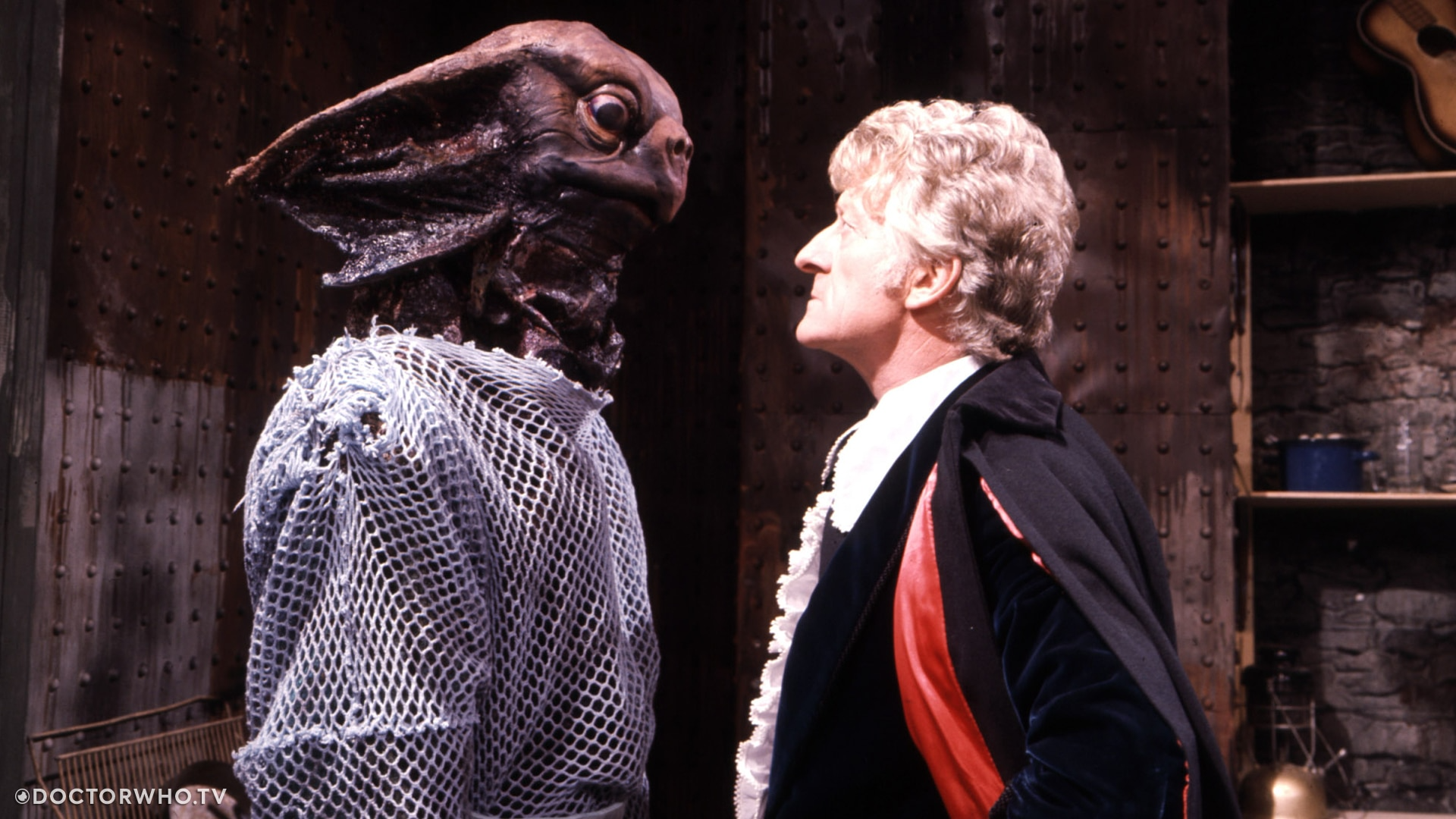
Most importantly, it understands what the 1970s classic “The Sea Devils” (Jon Pertwee’s Third Doctor) always had bubbling under its action-adventure surface: the Sea Devils are not simply “monsters.” They are the planet’s unresolved argument with humanity. “The War…” takes that argument and puts it on the evening news.
Ties to the 1970s: Why “The Sea Devils” Still Matters Here
The Pertwee-era Sea Devils story wasn’t just about naval bases and hypnosis — it was about miscommunication, territorial guilt, and militaries reaching for the gun before the translator. This series inherits that DNA and modernises it with sharper political consequences and a wider international lens.
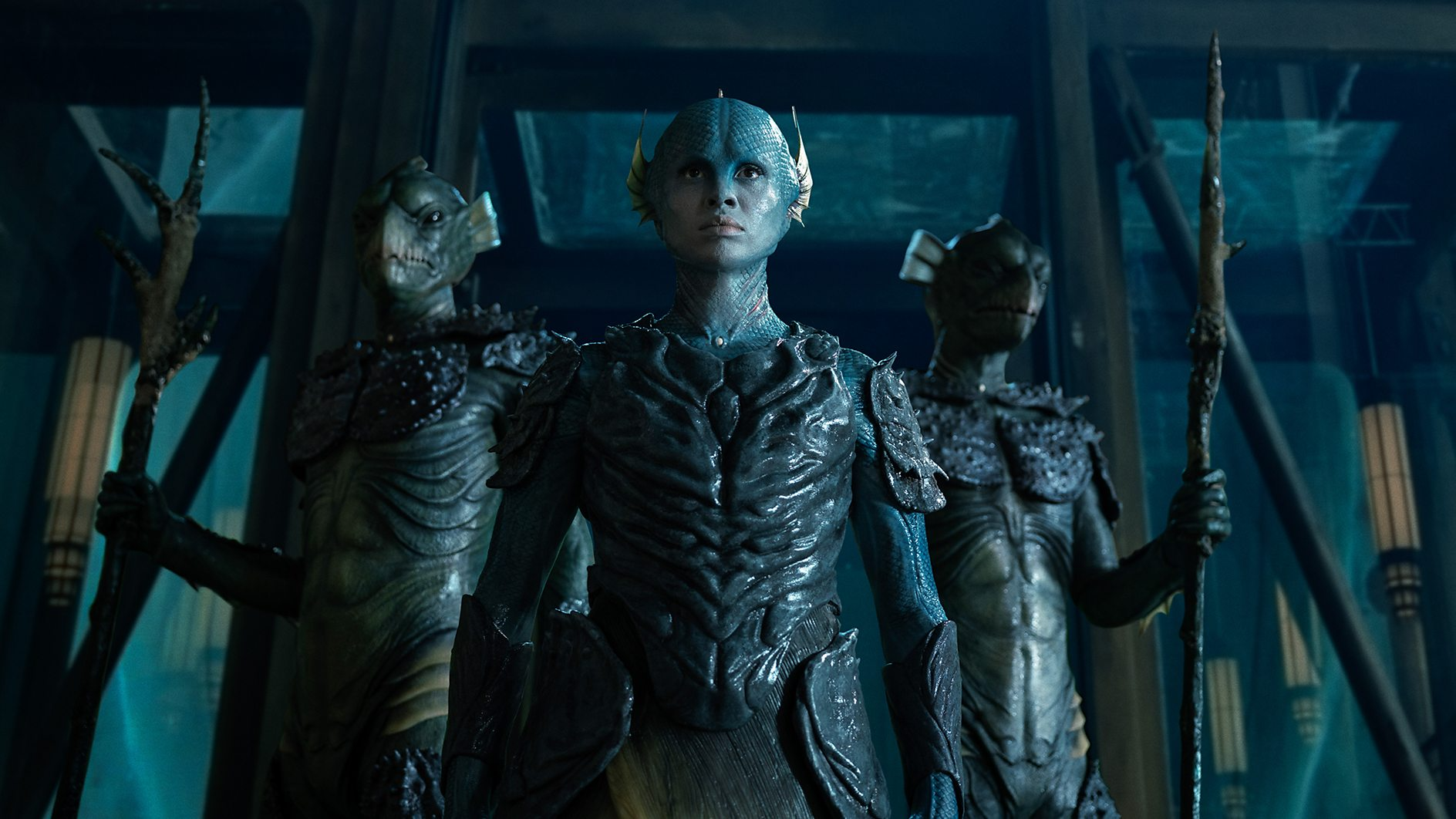
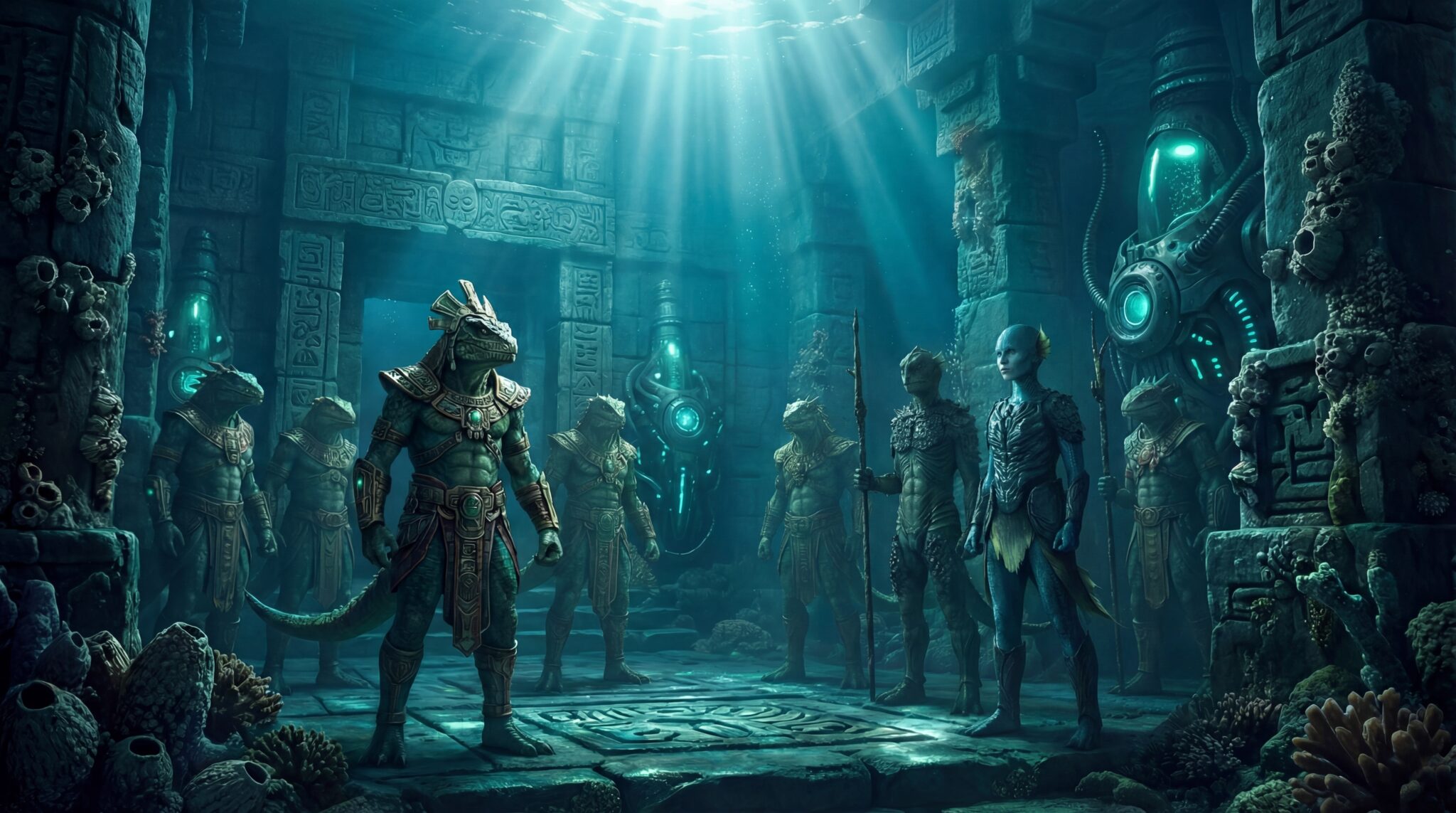
Like the Third Doctor serial, the central tragedy is not that two species meet — it’s that both sides arrive already convinced the other is incapable of change. The Sea Devils (here framed in contemporary, world-facing terms) aren’t written as cackling invaders. They’re written as a civilisation returning to a home that has been strip-mined, plastic-choked, and claimed by a species that behaves like a temporary tenant.
That continuity of theme is the show’s greatest act of respect to classic Who: not a wink, not a cameo — but a philosophical through-line.
Episodes 1–2: A Confident Launch With a Real Sense of Scale
The opening double bill establishes the show’s key strengths: pace, clarity, and a surprisingly human emotional core. The premise is elegantly combustible: UNIT is forced into diplomacy with an ancient ocean species, and someone must be chosen as the human face of that negotiation — whether or not the world is emotionally mature enough to survive it.
The tone is noticeably tougher than the parent series’ recent run — less fairy-tale, more statecraft. You can feel the series tugging the Whoniverse toward the territory once patrolled by Torchwood (without copying it), where consequences land harder because nobody can sonic their way out.
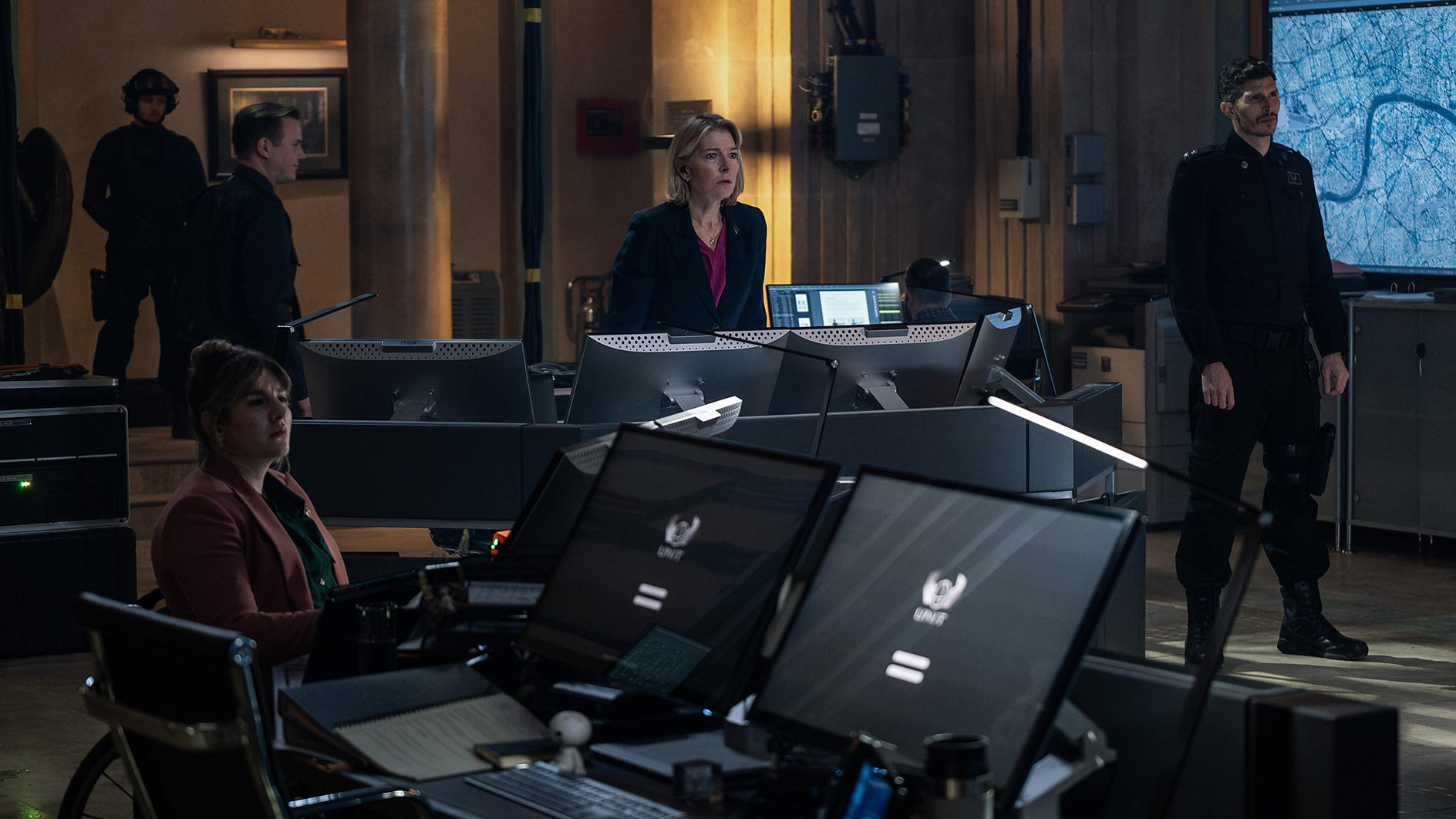
Crucially, the writing gives UNIT what it often lacks in the flagship show: time to behave like an institution. Not a convenient squad. Not a plot device. An apparatus with competing priorities, broken sleep, political pressure, and human weakness.
Lorne Balfe’s Score: Orchestral Weight, Modern Teeth
The show’s sonic identity is a major part of why it feels “bigger” than a spin-off. The music is composed by Lorne Balfe, whose approach here blends orchestral scale with modern textures — the kind of sound that can make a shoreline feel like a front line.
The most headline-grabbing musical moment lands at the end with a cover of David Bowie’s “Heroes”, performed by Alison Goldfrapp and Balfe — a closing track that isn’t just needle-drop nostalgia, but an emotionally bruising punctuation mark on a story about courage, loss, and the terrible cost of “doing the right thing” too late.
If you’re collecting, the soundtrack has already seen a digital release window in early December 2025, with a physical CD release scheduled for late January 2026 via Silva Screen Records.
Episode 3: “The Deep” — Shock, Awe, and the Moment UNIT Stops Feeling Safe
Episode 3 is where the series stops “building” and starts cutting. The pace tightens. The tension becomes physical. The political noise turns into operational panic. And then the episode detonates a moment that redefines the show’s emotional centre.
This is the hour where the spin-off earns its title: the conflict is no longer theoretical, no longer preventable with a meeting, no longer containable with a statement. It becomes a war — not because either side wants it, but because systems and human instincts push events past the point of return.
And it culminates in one of the most effective cliff-hangers the Whoniverse has delivered in recent memory: a final beat that lands as pure adrenaline, but also as something worse — inevitability.
Episode 4: Grief as Strategy — Kate Stewart’s Devastating New Reality
If Episode 3 is the punch, Episode 4 is the bruise spreading through UNIT’s entire body. The series finally commits to developing Kate Lethbridge-Stewart not just as “the Brigadier’s legacy,” but as a person with a private life that can be wounded — and a professional role that cannot pause to heal.
What makes this arc hit is the contrast: Kate is grief-struck, but still required to lead. She is shattered, but still expected to sound certain. She is mourning, while world leaders manoeuvre, pressure mounts, and catastrophe threatens to escalate.
It’s here that Jemma Redgrave is given the kind of material that turns a long-serving supporting figure into a dramatic lead — and she rises to it with a rawness the franchise has too rarely demanded of her.
Performance and Craft: Who Carries the Weight?
The ensemble work is a big part of the show’s credibility: you believe these people are living inside a crisis, not visiting it for a plot beat. The series is at its strongest when it lets character choices create consequence — and when it trusts silence, exhaustion, and fear to play as drama.
Visually, the show leans into cold realism and coastal dread rather than glossy sci-fi. It understands that oceans are frightening precisely because they look calm until they don’t.
UK Overnight Ratings: A Strong Start — and a Story in the Drop
On linear BBC One overnights, the series launched strongly and (in like-for-like comparisons) outperformed the most recent main-series seasons’ typical overnight figures — with the important caveat that release models differ and overnights never capture catch-up viewing.
Episode 1: 2.82m (overnight average)
Episode 2: 2.05m (overnight average)
Episode 3: 2.45m (overnight average)
Episode 4: 1.7m (overnight average)
That Episode 3 rebound is particularly telling: momentum didn’t just “hold” — it surged when the story delivered its biggest shock and its most aggressive pacing. Episode 4’s drop, meanwhile, reads less like rejection and more like what overnights often do after a major event-hour: viewers time-shift, catch up later, and the true performance becomes clearer in consolidated figures.
Verdict
Verdict Summary Box
Performances: 9 / 10
Direction: 8.5 / 10
Score & Sound Design: 9 / 10
Cinematography: 8.5 / 10
Writing & Structure (Eps 1–4): 8.5 / 10
Overall:8.8 / 10
Across its first four episodes, “The War Between The Land and The Sea” feels like a franchise growing up — not by becoming grim, but by becoming honest about consequence. It respects the Sea Devils’ classic Doctor Who history by treating them as a moral mirror, not a rubber-suit punchline. And it finally gives Kate Stewart the kind of storyline that transforms her from “UNIT’s boss” into a character you fear for — because now she has something to lose, and the show is brave enough to take it away.
If Episode 3 is the turning point — and it is — then the finale isn’t just a conclusion. It’s a reckoning.
Major Spoilers: The Death That Changes UNIT
Warning: Spoilers for Episode 3.
Episode 3’s most devastating move is the death of Colonel Christofer Ibrahim — a loss that doesn’t play as “shock value” alone, but as a narrative decision designed to permanently alter Kate Stewart’s internal landscape.
The writing uses the tragedy with purpose: it forces Kate to lead while destabilised, to negotiate while enraged, and to remain “the adult in the room” while every part of her wants to burn the room down. It’s the kind of emotional contradiction that produces great drama — and Redgrave sells it with exhausted precision.