
There is a strange sound coming from the Doctor Who universe.
Listen to the audio edition
Silence.
No grinding and wheezing engines.
No TARDIS materialising on a London street.
No Christmas Day date with the Doctor.
No new regular series currently rolling before the cameras.
No confirmed next Doctor.
No confirmed showrunner.
No confirmed transmission date.
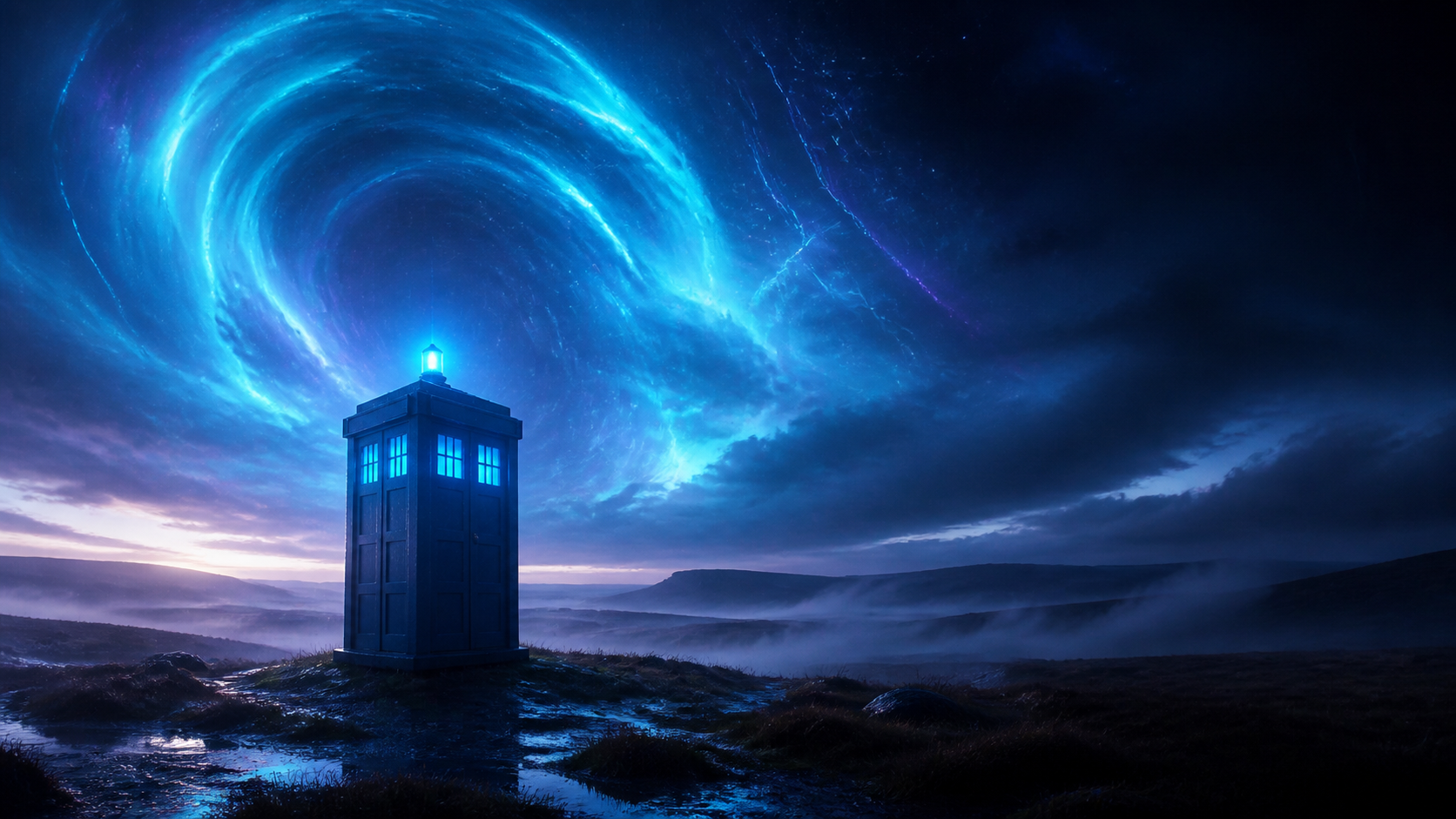
And after more than six decades of Daleks, Cybermen, Time Lords, regeneration energy, sonic screwdrivers, impossible girls and companions running breathlessly down corridors, British television’s most famous Time Lord has once again disappeared into the vortex.
So let’s stop dancing around it.
Doctor Who is in hiatus.
You can call it effectively cancelled.
You can call it postponed.
You can call it suspended.
You can call it another Wilderness Years.
What you cannot currently call it is a television programme with another commissioned series ready to go.
And perhaps — whisper it quietly before somebody summons the Daleks — that may ultimately be the best thing that could happen to Doctor Who.
Because the question facing the BBC is no longer simply:
Who should be the next Doctor?
It is something much bigger.
What should Doctor Who actually become next?
Let’s Call It What It Is: Doctor Who Has Stopped
The BBC has not formally announced the permanent cancellation of Doctor Who.
That distinction matters.
But so does reality.
On 10 June 2026, the BBC announced that Doctor Who would be put out to competitive tender as it searches for the production operation that will take the programme into its next era.
At exactly the same time came another bombshell.
The previously announced 2026 Doctor Who Christmas special would not happen.
The BBC, Russell T Davies and Bad Wolf jointly decided to abandon it. The corporation said it wanted to concentrate resources on the programme’s longer-term future rather than produce a single episode merely to bridge the gap. (Doctor Who)
And then there is Russell T Davies.
Gone.
Bad Wolf’s existing tenure as producer?
Ending.
The Disney+ partnership that was supposed to propel Doctor Who into a new era as a genuinely global television franchise?
Also over.
Disney confirmed in 2025 that it would not partner on the next season. (Doctor Who)
So although the BBC understandably refuses to hang a sign on the TARDIS reading CANCELLED, the practical situation for the audience is obvious.
There is currently no new regular Doctor Who television series in production.
There is no announced filming date.
There is no transmission date.
There is no confirmed showrunner.
There is no confirmed Doctor.
Even the episode that was supposed to keep the flame burning at Christmas 2026 has been extinguished.
That is a hiatus.
And an undefined one at that.
Even The Guardian described the current situation in June as Doctor Who entering an “undefined hiatus period.” (The Guardian)
But Doctor Who Isn’t Dead
This is where things become interesting.
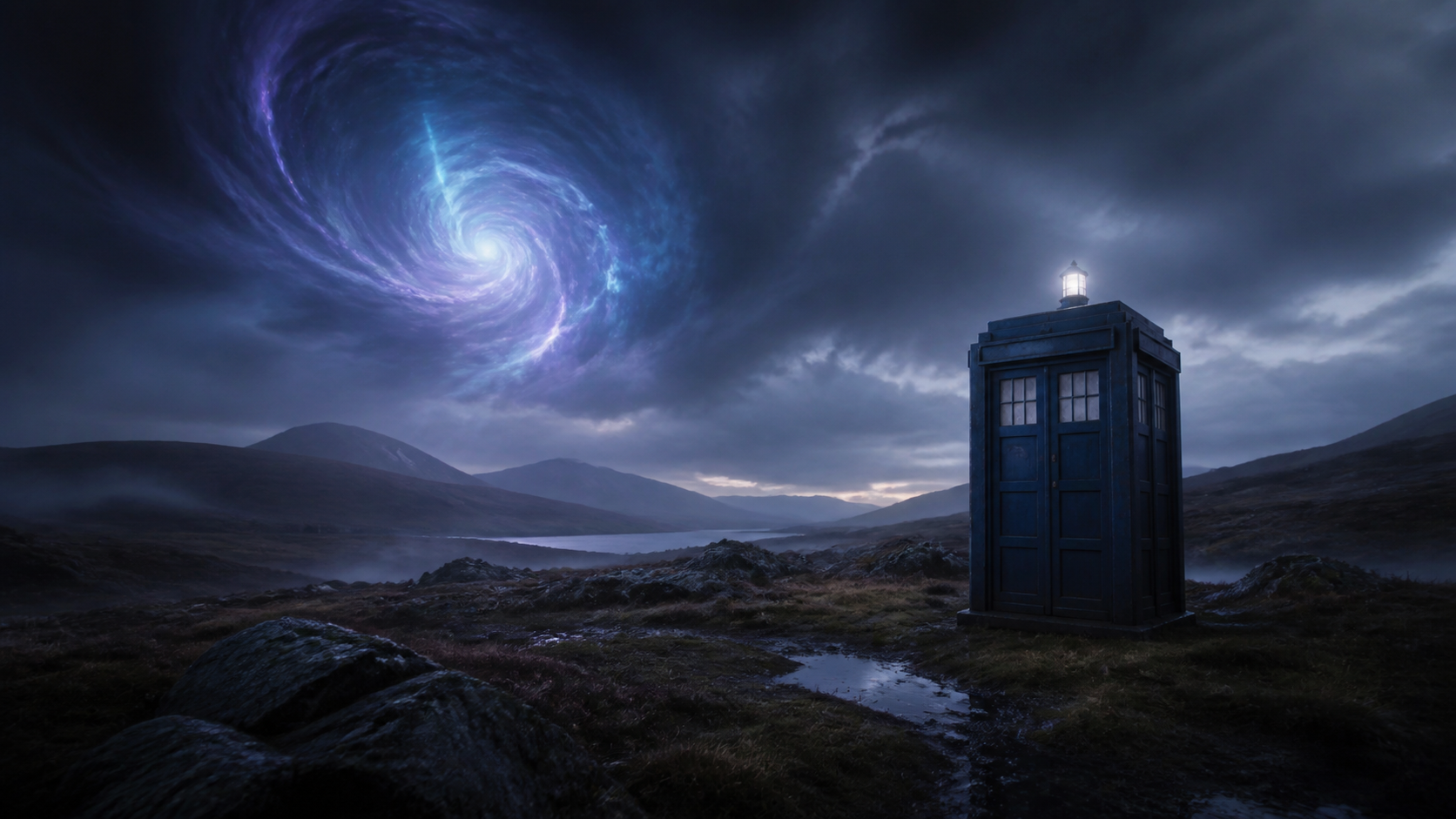
Because hiatus is not death.
Doctor Who fans of a certain vintage know this better than almost anybody.
On 6 December 1989, the Seventh Doctor and Ace walked into the distance at the conclusion of Survival.
And that was that.
No spectacular death.
No final regeneration.
No funeral for the Doctor.
The TARDIS simply stopped arriving every week.
The original programme had run for an extraordinary 26 consecutive seasons, producing 694 episodes between November 1963 and December 1989. (Guinness World Records)
Then came what fans eventually called the Wilderness Years.
Books kept the universe alive.
Doctor Who Magazine kept going.
Audio drama followed.
The 1996 Paul McGann television movie briefly opened the TARDIS doors again.
But regular Doctor Who television did not properly return until 2005.
Then Christopher Eccleston took Billie Piper’s Rose Tyler by the hand and gave her one beautifully simple command:
“Run!”
And Doctor Who ran.
For another generation.
So anybody writing an obituary for Doctor Who in 2026 should probably keep the coffin receipt.
This programme has regenerated from television death before.
Could the TARDIS Really Stay Parked Until 2028?
This is the question fans are increasingly going to ask.
And here’s the important caveat:
The BBC has not announced that Doctor Who will return in 2028.
There is no confirmed 65th-anniversary series.
There is no confirmed 65th-anniversary special.
But look at the calendar.
Doctor Who turns 65 on 23 November 2028.
And look at what now has to happen.
The competitive tender has to run.
A producer has to emerge.
Contracts have to be negotiated.
A creative direction has to be established.
A showrunner or equivalent creative leadership has to be appointed.
Scripts need developing.
The Doctor needs casting.
Companions need casting.
Sets need constructing.
The TARDIS itself potentially needs rebuilding.
Then comes filming.
Then editing.
Then one of the most time-consuming elements of modern Doctor Who: visual effects and post-production.
This is not EastEnders.
You cannot decide in January that the Cybermen are invading Mars and have eight episodes ready by Easter.
Russell T Davies himself acknowledged that fans would now have to wait longer, while insisting that the eventual objective was more Doctor Who, not merely the abandoned one-off Christmas episode. (Royal Television Society)
Which makes 2028 increasingly fascinating.
Perhaps Doctor Who’s 65th anniversary shouldn’t merely commemorate its past.
Perhaps it should introduce its future.
Maybe Doctor Who Needs to Disappear
I know.
Blasphemy.
Somewhere a Dalek is already screaming:
“EXTERMINATE THE COLUMNIST!”
But consider it.
Perhaps the greatest enemy Doctor Who currently faces isn’t Davros.
It isn’t the Master.
It isn’t the Toymaker.
It isn’t even the BBC budget.
It’s familiarity.
Doctor Who used to disappear.
When it returned, it felt like an event.
We waited for regeneration.
We wondered what the TARDIS would look like.
A new Doctor felt genuinely new.
But modern franchise culture demands constant content.
New series.
New special.
New spin-off.
New trailer.
New casting announcement.
Another regeneration.
Another Dalek.
Another Cyberman.
Another headline announcing that Doctor Who has “changed forever”.
Eventually even changing forever becomes repetitive.
Perhaps the BBC should do something incredibly old-fashioned.
Make us miss it.
Switch off the console.
Close the TARDIS doors.
Put the key in a drawer.
And leave it there.
Not forever.
Just long enough for hearing that familiar materialisation sound again to mean something.
The Disney Era: Ambitious, Expensive — and Deeply Divisive
There is no point discussing Doctor Who’s future while pretending its immediate past didn’t happen.
The BBC and Disney announced their partnership in 2022 with enormous ambition.
Disney+ would become the international home for new Doctor Who outside Britain and Ireland, while the BBC described a shared ambition to transform the programme into a global franchise on an unprecedented scale. (Doctor Who)
Russell T Davies returned.
David Tennant returned.
Catherine Tate returned.
Then Ncuti Gatwa arrived as the Fifteenth Doctor.
The production looked richer.
The visual effects became more sophisticated.
The programme had scale.
Gatwa himself brought charisma, emotional openness and tremendous physical energy to the Doctor.
And there were people who loved this era.
That needs saying.
But let’s also stop pretending that everybody did.
They didn’t.
The era became unusually polarising.
And there were worrying audience signals.
The April 2025 episode Lux recorded an overnight BBC One audience of approximately 1.58 million, at the time the lowest overnight figure in Doctor Who’s history. That figure did not include people who had already watched through BBC iPlayer, so using it as though it represented the entire audience would be misleading — but neither should the underlying decline in traditional viewing be ignored. (Radio Times)
This is the nuance that arguments about Doctor Who frequently lose.
It is not credible to claim “nobody watched it.”
Millions still did.
It is equally unconvincing to insist that everything was fine.
It wasn’t.
Disney walked away from the next season.
The existing production era ended.
Russell T Davies departed.
The Christmas special disappeared.
Doctor Who went to tender.
You can debate why all day.
But you cannot pretend nothing happened.
The Next Doctor Who Cannot Simply Be More Doctor Who
And this is where I think the BBC has a once-in-a-generation opportunity.
Don’t simply restart the machine.
Regenerate it.
Because the obvious solution is also potentially the worst one.
Cast Doctor number whatever-number-we-are-calling-it-this-week.
Cast an attractive young companion from contemporary Britain.
Put them in the TARDIS.
Land them in present-day London.
Introduce the companion’s mum.
Meet the neighbours.
Throw in an alien.
Visit Victorian England by Episode Three.
Daleks by Episode Six.
Cybermen for the finale.
Rinse.
Regenerate.
Repeat.
We have done this.
Very successfully.
But Doctor Who cannot survive indefinitely by recreating 2005 Doctor Who.
2005 succeeded precisely because Russell T Davies understood that he wasn’t resurrecting 1975.
He made Doctor Who for 2005.
The next producers must have the courage to do the same thing.
Make Doctor Who for the world we are entering.
Where Is Doctor Who’s Great AI Story?
Artificial intelligence may become one of the defining technological, economic and philosophical issues of our century.
We are already watching it happen.
Generative AI.
Artificial companions.
Synthetic voices.
AI-generated video.
Digital humans.
Autonomous agents.
Deepfakes.
Algorithmic manipulation.
Robotics.
Military AI.
Machines capable of mimicking human conversation.
The possibility of artificial general intelligence.
Questions about employment.
Questions about truth.
Questions about creativity.
Questions about consciousness itself.
And yes, before somebody races for the comments section:
Doctor Who has dealt with artificial intelligence before.
Of course it has.
From WOTAN in The War Machines in 1966 through countless computers, robots, cybernetic societies and machine intelligences, Doctor Who has spent six decades playing with the relationship between humans and technology.
The Cybermen themselves are arguably one of television’s earliest and most durable nightmares about technological enhancement gradually consuming human identity.
But what Doctor Who hasn’t yet had the opportunity to do is really interrogate this AI revolution.
The one happening to us.
Right now.
Imagine an AI Companion in the TARDIS
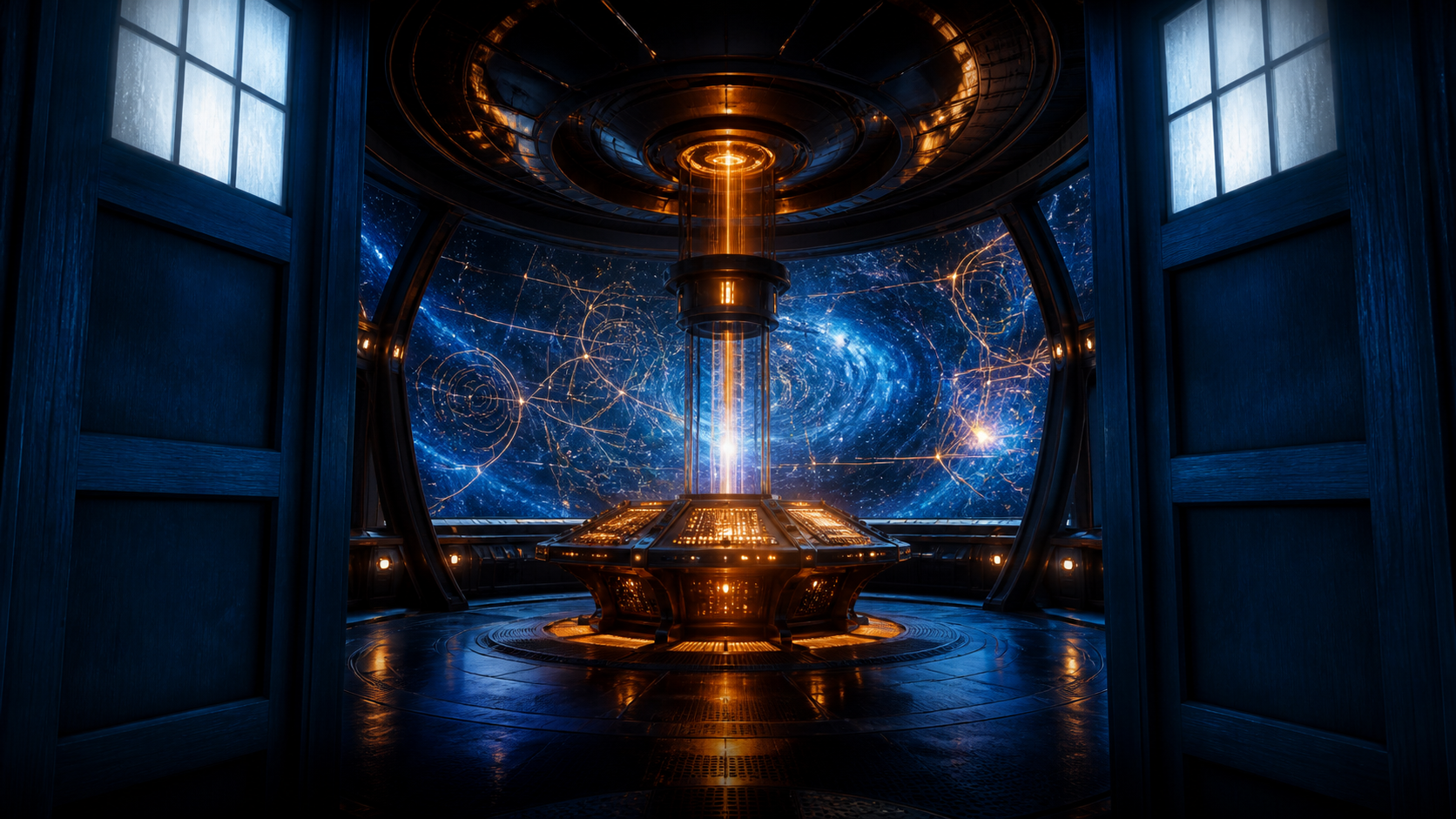
Here is where things could become fascinating.
Forget another conventional companion for a moment.
Give the Doctor an artificial intelligence.
Not K9 2.0.
Not a comedy robot.
An actual synthetic intelligence.
Perhaps it begins life inside the TARDIS.
Perhaps the Doctor builds it.
Perhaps the TARDIS creates it.
Perhaps it has no physical body at all.
Then, eventually, it wants one.
It travels with the Doctor.
It learns.
It watches humanity.
It develops humour.
Fear.
Jealousy.
Compassion.
Love.
And slowly the Doctor begins treating it not as software…
…but as a person.
Then ask the quintessential Doctor Who question:
What makes something alive?
What happens when the Doctor protects an AI from humans who want to switch it off?
What happens when it discovers that its personality can be copied?
Which copy is the real one?
Can artificial consciousness die?
Could an AI regenerate?
Could the Doctor’s companion exist simultaneously in a thousand places?
And what happens if the Doctor eventually discovers that the companion has been quietly changing the TARDIS?
Now we have something.
Not merely CGI.
An idea.
And great Doctor Who has always begun with an idea.
Doctor Who Doesn’t Need Bigger Effects — It Needs Bigger Ideas
That is perhaps the greatest lesson the next production team should learn.
Doctor Who cannot out-Marvel Marvel.
It cannot out-Star Wars Star Wars.
It cannot necessarily outspend Netflix.
And it doesn’t need to.
Think about one of the most successful Doctor Who monsters of the modern era.
The Weeping Angels.
The fundamental idea can be explained in two words:
Don’t blink.
That’s Doctor Who.
The Daleks are not terrifying because they look technologically plausible.
A pepper-pot-shaped alien screaming at you while holding something resembling a sink plunger should be ridiculous.
Instead:
“EXTERMINATE!”
Children hide behind sofas.
Why?
Because the idea works.
The Cybermen aren’t enduring because the costumes cost millions.
They represent the eradication of individuality, emotion and humanity in pursuit of technological perfection.
Great science fiction isn’t ultimately about spaceships.
It uses spaceships to talk about us.
That’s what Doctor Who needs again.
Tell Stories About the World We Are Actually Entering
Imagine Doctor Who tackling:
Digital immortality.
A civilisation where nobody dies because every consciousness is uploaded — until the Doctor discovers what the network is actually doing with the dead.
Deepfake reality.
The TARDIS arrives on an Earth where nobody believes photographic or video evidence because artificial media has made objective reality impossible to establish.
Algorithmic government.
Human politicians surrendered decision-making to an AI because it always made the statistically “correct” decision.
War disappeared.
Crime collapsed.
Everybody is safe.
There is only one problem.
Nobody is free.
Artificial love.
A planet where human relationships have largely disappeared because synthetic companions have been designed to be emotionally perfect.
Automation.
A civilisation where machines perform every job and humanity has achieved complete abundance.
It sounds like paradise.
Naturally, because this is Doctor Who, something is horribly wrong.
These are stories children watching today could grow up remembering.
Just as previous generations remembered Daleks, Cybermen, Autons and Weeping Angels.
Does Doctor Who Even Have to Return as a Conventional TV Series?
And here comes the really heretical question.
Why does Doctor Who have to come back exactly as it left?
Nobody has announced a Doctor Who movie series.
Let’s make that absolutely clear.
There is currently no confirmed plan to replace regular Doctor Who with theatrical films.
But surely everything should now be on the table.
The tender should not simply ask:
“Who can make eight more episodes?”
It should ask:
“What is the best possible way to tell Doctor Who stories in the 2030s?”
Perhaps that’s eight episodes.
Perhaps it’s six.
Perhaps it’s three 90-minute television films every year.
Perhaps Doctor Who becomes an event series.
Perhaps we occasionally get a genuine theatrical Doctor Who adventure followed by its BBC release.
Perhaps streaming and cinema coexist.
Perhaps the answer is something nobody has tried before.
Doctor Who possesses the single most flexible narrative device in television history.
A machine that can travel to any place, on any planet, at any point in time.
Why should the format containing it be inflexible?
Imagine Doctor Who on the Big Screen
Properly done.
Not simply a television episode projected into cinemas.
A genuine cinematic Doctor Who adventure.
The TARDIS doors open.
IMAX.
A completely alien world.
A story big enough to justify the screen.
And importantly, not an attempt to turn the Doctor into James Bond with a sonic screwdriver.
Keep the character.
Keep the eccentricity.
Keep the intelligence.
Keep the moral compass.
Keep the madness.
But give those ideas scale.
Imagine a trilogy in which each film stands alone while quietly revealing a larger mystery.
Then between films, smaller BBC stories continue on television or iPlayer.
Would it work?
Maybe.
Maybe not.
But this is precisely the moment to ask the question.
Because Doctor Who is already stopped.
There may never be a better opportunity to experiment.
And Then There Is Star Trek
There is something rather wonderful about all of this happening in 2026, the year another great science-fiction institution celebrates sixty years.
Star Trek.
Doctor Who arrived in 1963.
Star Trek followed in 1966.
Different countries.
Different philosophies.
Different machines.
One has a starship carrying hundreds of people.
The other has a telephone box carrying an impossible number of rooms.
Yet both have survived cancellations, changing audiences, changing technology, hostile critics, changing television economics and their own occasional creative disasters.
And Doctor Who still has an astonishing distinction.
Guinness World Records has recognised it as the world’s longest-running science-fiction television series, while separately recording the extraordinary 694-episode continuous original run between 1963 and 1989. (Guinness World Records)
That’s not merely television history.
That’s cultural survival.
Doctor Who and Star Trek Have Already Crossed Universes
And here’s where things become gloriously geeky.
Captain Picard has already met the Doctor.
Yes.
Really.
In 2012, IDW launched the official eight-part comic-book crossover:
Star Trek: The Next Generation/Doctor Who — Assimilation²
The Eleventh Doctor.
Amy Pond.
Rory Williams.
Jean-Luc Picard.
Data.
Riker.
Worf.
The Enterprise-D.
The TARDIS.
And because merely crossing Doctor Who with Star Trek apparently wasn’t insane enough, the story united two of science fiction’s most terrifying technological enemies:
The Borg and the Cybermen.
Star Trek’s own official site announced the crossover at the time and described the Borg/Cybermen alliance threatening the galaxy. (Star Trek)
And wonderfully, the crossover didn’t stop with Picard.
The Fourth Doctor even encountered Kirk and Spock through a flashback sequence. (Star Trek)
Come on.
Tell me you wouldn’t watch that.
Doctor Who x Star Trek: The Movie Nobody Knew They Needed
Picture it.
A Federation starship detects an impossible object floating motionless in deep space.
Blue.
Wooden.
Approximately two metres tall.
Data examines the sensor readings.
DATA: “Captain, the object’s internal dimensions appear to exceed its external dimensions by several orders of magnitude.”
Picard raises an eyebrow.
Worf recommends raising shields.
Obviously.
The doors open.
A stranger walks onto the bridge.
Looks around.
Grins.
“Oh! Enterprise! Knew I’d get here eventually.”
Cut to title.
DOCTOR WHO x STAR TREK
Then the Cybermen find Borg technology.
Imagine the arguments.
BORG: “Resistance is futile.”
CYBERMAN: “You will be upgraded.”
Somewhere the Doctor rubs their forehead.
“Oh, that’s just what we need.”
Take my money.
And more seriously, the fact that this crossover has already worked in comics proves how extraordinarily elastic these two universes are.
In Star Trek’s 60th-anniversary year, perhaps it’s worth remembering that science-fiction institutions survive by doing something more ambitious than endlessly repeating what worked twenty years ago.
But Doctor Who Must Remain British
There is one thing I would absolutely not reinvent.
Doctor Who’s identity.
It is British.
Profoundly, gloriously, eccentrically British.
That doesn’t mean it should be small.
It doesn’t mean every episode must happen in Cardiff.
And it certainly doesn’t mean international audiences shouldn’t be welcomed.
It means Doctor Who should never become generic global streaming content.
The blue police box matters.
The humour matters.
The eccentricity matters.
The slight distrust of authority matters.
The Doctor’s preference for intelligence over violence matters.
The ridiculous clothes matter.
The ability to walk into a room full of generals, kings, presidents, aliens and monsters and somehow become the most important person there without carrying a gun matters.
That’s Doctor Who.
A hero who can save reality armed with two hearts, a screwdriver, an absurd coat and an absolutely unreasonable amount of confidence.
You don’t globalise Doctor Who by sanding those edges away.
You globalise it by making the rest of the world fall in love with them.
The Doctor Isn’t a Superhero
This matters too.
Please don’t bring Doctor Who back as another superhero franchise.
The Doctor doesn’t need to punch the villain through a skyscraper.
The Doctor doesn’t need a costume designed to sell action figures.
The Doctor doesn’t save the universe because they’re the strongest person in it.
The Doctor wins because they’re usually the smartest.
Sometimes the kindest.
Occasionally the maddest.
And often the person most willing to offer the monster one last chance.
That’s enormously important.
In an entertainment culture obsessed with power, the Doctor represents something different.
Intelligence is power.
Compassion is power.
Curiosity is power.
And sometimes running very quickly down a corridor helps too.
So Who Should the Next Doctor Be?
We don’t know.
And for once, perhaps that’s exciting.
The extraordinary 2025 finale left audiences with Ncuti Gatwa’s Doctor apparently regenerating into Billie Piper, but Russell T Davies later said no actor had been approached for the next Doctor in connection with the aborted Christmas special. (Royal Television Society)
Which means one of Doctor Who’s most delicious unanswered questions is simply hanging there in the vortex.
What exactly did we see?
Who is Billie Piper playing?
What happens next?
Does the new production team honour that cliffhanger?
Rewrite it?
Resolve it in five minutes?
Build an entire series around it?
Nobody outside the process currently knows.
And that uncertainty is perhaps the first genuinely exciting thing about this hiatus.
For once, anything could happen.
Don’t Erase the Past — Stop Being Imprisoned by It
Reinvention doesn’t mean pretending sixty-plus years of Doctor Who never happened.
Absolutely not.
William Hartnell matters.
Patrick Troughton matters.
Jon Pertwee.
Tom Baker.
Peter Davison.
Colin Baker.
Sylvester McCoy.
Paul McGann.
Christopher Eccleston.
David Tennant.
Matt Smith.
Peter Capaldi.
Jodie Whittaker.
Ncuti Gatwa.
All of it matters.
But continuity should be a treasure chest.
Not a prison.
A child watching their first episode in 2028 should not require a doctorate in Gallifreyan history to understand what’s happening.
They should require only this:
There’s a mysterious traveller called the Doctor.
The Doctor has a machine called the TARDIS.
It’s bigger on the inside.
It can go anywhere.
Someone comes along for the ride.
And then something impossible happens.
That’s enough.
Everything else can wait.
Perhaps the 65th Anniversary Shouldn’t Celebrate the Past
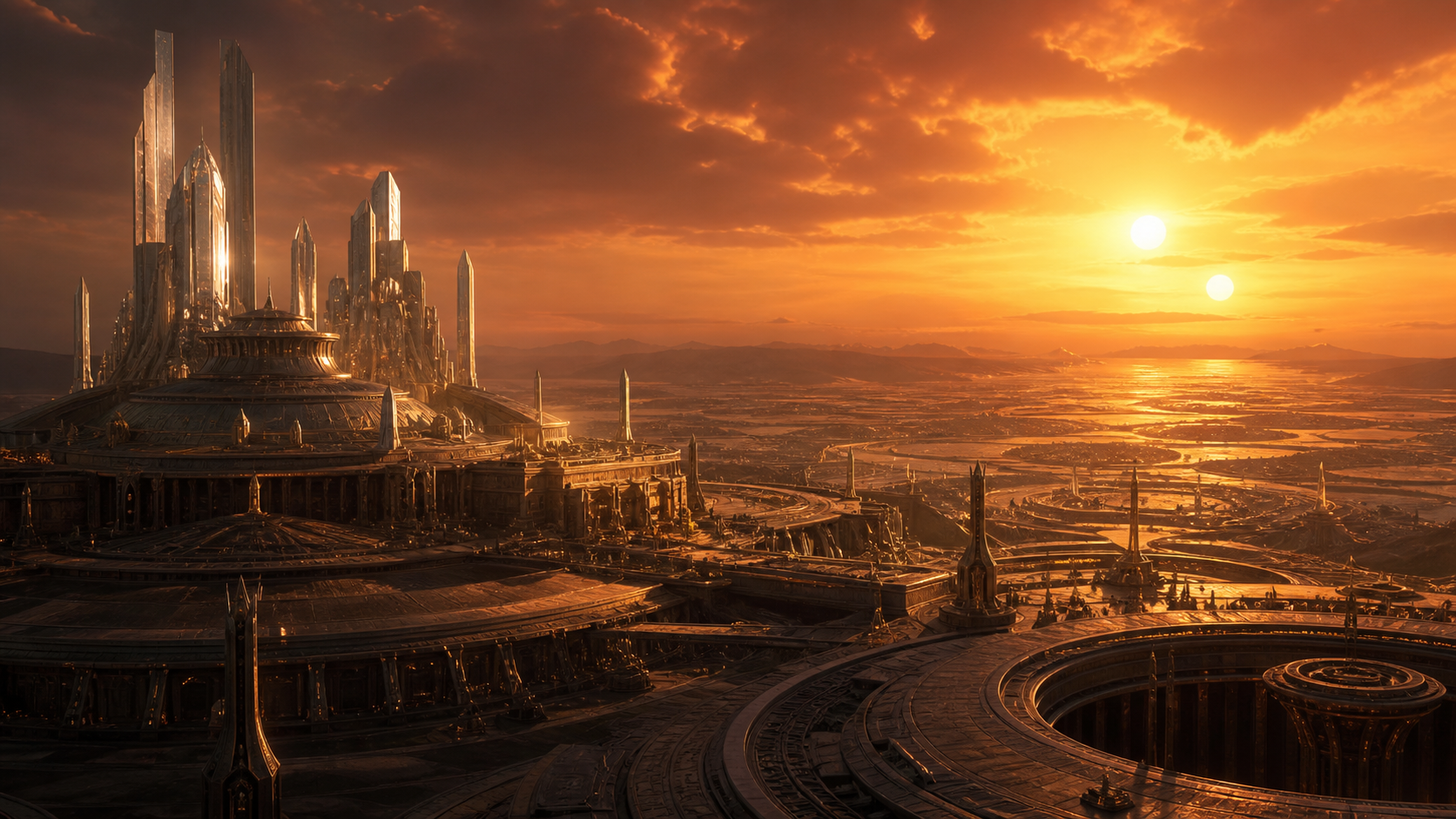
Here’s my pitch.
Don’t make the 65th anniversary another parade of former Doctors.
We’ve done that.
And frequently done it brilliantly.
If former Doctors appear, wonderful.
But don’t make nostalgia the entire point.
Make 23 November 2028 the day Doctor Who looks forwards.
A new Doctor.
A radically redesigned era.
A genuinely strange TARDIS.
A new storytelling format.
A companion unlike anything we’ve previously seen.
A programme willing to tackle AI, identity, virtual reality, bioengineering, climate engineering, space colonisation, longevity, post-humanity and the increasingly blurred boundary between the biological and the artificial.
Let older fans recognise Doctor Who.
But let younger viewers feel that it belongs to them.
That’s how the programme survives another sixty-five years.
For Now, Enjoy the Wilderness
And so here we are.
Doctor Who is effectively cancelled or postponed in its current television incarnation.
It is in hiatus.
The BBC says it wants the Doctor back.
Its competitive tender is explicitly intended to secure the programme’s next phase, and the BBC retains the Doctor Who intellectual property. (Doctor Who)
But intention is not the same thing as a commissioned series.
There is no confirmed television return date.
And that’s the reality fans have to live with.
For now.
But we’re hardly short of Doctor Who.
We have more than sixty years to revisit.
Hundreds upon hundreds of episodes.
Classic Who.
The Wilderness Years.
The Paul McGann movie.
The Eccleston resurrection.
Tennant.
Smith.
Capaldi.
Whittaker.
Gatwa.
Torchwood.
The Sarah Jane Adventures.
Novels.
Comics.
Audio adventures.
Missing episodes that occasionally perform the extraordinary trick of returning from the dead.
There may never have been a better time to explore the history of Doctor Who.
And Then, One Day…
Maybe 2028.
Maybe 2029.
Maybe somewhere we haven’t even considered.
Television.
Streaming.
Cinema.
Perhaps all three.
A generation of children who have never seen a new Doctor Who episode will be sitting in front of a screen.
The room goes dark.
Nothing.
Silence.
Then—
VWORP.
VWORP.
VWORP.
That sound.
A battered blue police box slowly materialises.
The doors open.
Someone steps out.
Not another attempt to recreate David Tennant.
Not a reconstruction of 2005.
Not a programme terrified of upsetting its own mythology.
Not an Americanised streaming approximation of what somebody thinks Doctor Who is supposed to be.
Something new.
Something dangerous.
Something imaginative.
Something clever.
Something enormous.
Something British.
The Doctor looks at a world transformed by artificial intelligence, robotics, synthetic consciousness and technologies we are only beginning to comprehend.
Looks at their companion.
Looks back at us.
Smiles.
And says:
“Come on, then.”
Because perhaps we’ve spent too much time asking who the next Doctor should be.
The bigger question is:
What should the next Doctor Who be?
The programme has survived for more than sixty years for one reason above all others.
Not Daleks.
Not Cybermen.
Not even the TARDIS.
Regeneration.
And regeneration was never simply the trick that allowed one actor to replace another.
It is Doctor Who’s greatest idea.
Change is not something to fear.
Change is how you survive.
So perhaps the BBC shouldn’t rush.
Park the TARDIS.
Turn off the lights.
Let us miss it.
Let a new creative team dream.
And when those doors eventually open again, don’t give us another imitation of the Doctor Who we already loved.
Give us the Doctor Who we never imagined was possible.
Bigger.
Bolder.
Stranger.
Smarter.
Relevant again.
Unmistakably British.
And completely, gloriously—
DOCTOR WHO.
Practical Details
- Television status: the BBC has announced a competitive tender for Doctor Who’s next phase.
- Return date: no next regular television episode has been announced.
- Anniversary: Doctor Who turns 65 on 23 November 2028.
Movieversalfilm Takeaway
The article’s case is an editorial argument: use the pause to make the next era feel genuinely new, while retaining the programme’s distinctly British identity.