
The biggest film of 2026 at the worldwide box office is, oddly, its most inward-looking blockbuster. Destin Daniel Cretton’s Spider-Man: Brand New Day treats Peter Parker’s anonymity not as a plot device but as grief, and asks whether a hero can go it alone in a franchise that never really lets him. Now that it has arrived on digital, we look at what it gets right, where it stumbles, and what it leaves behind.
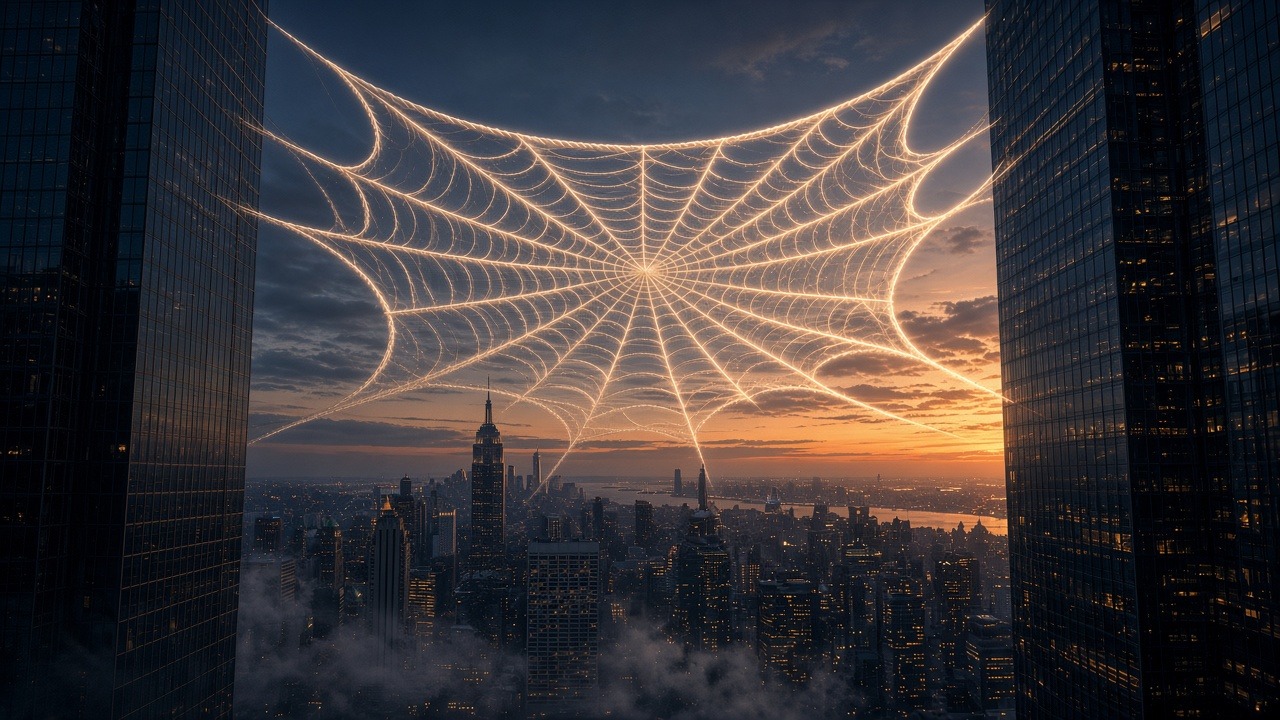
Movie at a Glance
- Film: Spider-Man: Brand New Day (2026)
- Director: Destin Daniel Cretton
- Starring: Tom Holland, Zendaya, Jacob Batalon, Sadie Sink, Jon Bernthal, Tramell Tillman
- UK certificate and running time: 12A, 145 minutes
- Where to watch: Digital rental and purchase in the UK from 6 October 2026; 4K UHD, Blu-ray and DVD from 14 December 2026
A hero nobody remembers
Every Spider-Man story eventually comes back to the same idea: the mask costs something. Sam Raimi made that cost romantic, Marc Webb made it tragic, and Jon Watts spent three films making it funny before Spider-Man: No Way Home (2021) sent the bill. Doctor Strange’s spell wiped Peter Parker from the world’s memory, and the boy who had spent a trilogy being looked after by Tony Stark, Aunt May and his friends was suddenly an adult with nobody to look after him.
Spider-Man: Brand New Day, the fourth Tom Holland film and the 38th in the Marvel Cinematic Universe, starts from that blank page. It is set four years later. Peter has chosen not to reintroduce himself to MJ (Zendaya) or Ned (Jacob Batalon). He patrols New York full-time, visits May’s grave and builds his suits on a homemade “Fabricator”, without Stark money. The city adores Spider-Man and has no idea Peter Parker exists.
My argument is this: Brand New Day is at its best when it treats being forgotten as a kind of bereavement, a grief Peter has to carry for people who are still alive. The “street-level reset” its makers promised turns out to be less a reset than a quarantine. Peter is cut off from his old life, and the film is supposedly cut off from the multiverse. Its weaknesses come from the moments when the wider Marvel machine leaks in. The film’s moral is that Peter must stop doing everything alone. The film itself, as an industrial object, was never allowed to try.
The premise: anonymity as grief
The film’s cleverest early decision comes before the first scene. In response to test audiences who had not seen No Way Home, Cretton reworked the Marvel Studios opening logo so that Peter vanishes from clips of the earlier films, according to reporting on the post-production. It is neat exposition, and a statement of subject: a life edited out of the record.
What follows is an opening montage. It reportedly recreates comic-book covers and runs Peter through a gallery of minor villains, including Tombstone, Boomerang, Tarantula, Ramrod and the Hand. It shows how good he has become at the job, and how little else he has: a highlights reel of a man with no evenings.
Holland has called this “the darkest chapter” of Peter’s life, and the screenplay, credited to returning writers Chris McKenna and Erik Sommers with uncredited rewrites by Justin Kuritzkes, gives the darkness a body. Peter’s isolation triggers a mutation: heightened senses, eyes that turn black, and organic webs from his wrists. It nods to the comic storyline The Other and to Tobey Maguire’s organic shooters. The writers have said that the “spider side” of Peter is filling the vacuum left by his lost humanity. That is a strong metaphor, and for long stretches the film trusts it.
Spoiler warning
The following sections discuss major plot developments, including the identity of the villain and the ending. If you have not yet seen Brand New Day, skip to “Now on digital”.
A villain who mirrors the hero
Much of the pre-release chatter was about whom Sadie Sink was playing. The answer is Jean Grey. Here she is a teenage telepath who can possess people within a short range and is attacking Department of Damage Control facilities. For half the film she is a hooded threat, jumping into strangers, into a rebuilt Scorpion (Michael Mando) and, most cruelly, into MJ. She uses MJ to make Peter believe, for a moment, that she remembers him. Several critics singled out that reveal as the film’s deepest cut, and rightly. It turns the franchise’s central wish against the audience.
The real villain is institutional. Tramell Tillman’s Bill Metzger, the smooth head of Damage Control, has been experimenting on superpowered people. Jean’s older sister Sara died in his custody. The cryptic “V-Max” Jean has been hunting turns out to be the weathered label on the vent in Sara’s cell, the last thing her sister saw. It is a heartbreaking detail that lifts the film above the usual McGuffin hunt.
Cretton has said that using a young, lonely person as the antagonist sharpened his grasp of the film’s ideas, and you can see why. Jean is Peter with no Aunt May. She is grieving, unsupervised and furious at a world that took her family. In the climax Peter lets her into his mind. What she finds there is a memory of May telling him she loves him for who he is, a scene Cretton credits to Kuritzkes. That is the film’s thesis made literal: the cure for loneliness is to be known.
Brand New Day is at its best when it treats being forgotten as a kind of bereavement, a grief Peter has to carry for people who are still alive.
The ending holds its nerve, mostly. MJ does not suddenly remember. Earlier, when Peter confesses his love, she does not return it, and the film lets that sting. She and Ned simply make room for a masked stranger. Then, in the final beat, Ned completes their old secret handshake almost by muscle memory and says Peter’s name. Whether that is a cheat depends on how strictly you read Strange’s spell. It works because memory returns through ritual and habit rather than magic, which suits a story about the small rituals that hold people together.
Direction: an indie heart in a tentpole body
Cretton came to Marvel via Short Term 12 and The Glass Castle, small films about damaged young people. Shang-Chi and the Legend of the Ten Rings showed he could do kinetic action, and the quieter scenes here show where his instincts lie. The best sequence in the film may be the evening when a masked Peter visits MJ and Ned’s flat and simply hangs out with friends who think they are meeting him for the first time. Holland reportedly asked to halt filming on an early version because it felt false, and Cretton sent the crew home so it could be rewritten.
The film also feels unusually physical for the MCU. Much of it was shot in Glasgow standing in for Manhattan, at Pinewood and around England. Cinematographer Brett Pawlak, a long-time Cretton collaborator, aimed for saturated colour and deep shadow inspired by comic art. Even In Review Online, otherwise sceptical, praised its “relatively tactile look and feel”.
Cretton is less sure with pacing. At 145 minutes, Brand New Day sags in its middle stretch as it collects guest stars. David Rooney in The Hollywood Reporter praised its “adrenaline and feeling” but noted that pacing is not always ideal. Others went further: the Guardian’s Peter Bradshaw found it uneven, and IndieWire’s David Ehrlich was openly hostile.
Performances
This is Holland’s film, and he is superb. Rooney called him “never-better”, and the description fits. The comic timing survives, but he now plays Peter as a young man rationing his own feelings. The suit was deliberately left with visible wrinkles, Holland’s face moving beneath the mask, and he wears it for most of the running time, so the physical performance carries much of the emotional weight.
Zendaya has a harder job: playing a woman who cannot know what the audience knows. Reviewers split on whether MJ has enough to do. Some felt she was sidelined. Moviefone felt she and Batalon “aren’t sidelined as many feared”. I lean that way, chiefly because of the confession scene, where her kindness to a stranger is more devastating than rejection would be.
Sink is excellent as Jean, all coiled grief and adolescent certainty. She plays a girl who does not believe she is the villain, because, by the film’s logic, she is not. Jon Bernthal’s Frank Castle is the scene-stealer. He is a gruff big brother whose swearing Peter literally webs shut, and a walking cautionary tale about where solitary heroism ends. Florence Pugh’s Yelena Belova, now carrying the Black Widow name, enlivens her few scenes. Tillman underplays Metzger to chilling effect; he has said he drew on the steadiness of politicians. Mark Ruffalo’s Bruce Banner is sadder here than we have seen him in years. That is part of the point, and part of the problem, as we will see.
Action, VFX and score
The set pieces are mostly a pleasure. Fight coordinator Peng Zhang, back from Shang-Chi, gives the brawls a precise, readable grammar. The climactic battle with the Hand was choreographed in a bird-wing formation, a nod to Jean’s comic-book link to the Phoenix, and the Seattle Times called a sequence pitting Spider-Man against acrobatic henchmen “mesmerizing”.
The Hulk fight, led by Industrial Light & Magic, is a technical showpiece. Framestore, Sony Pictures Imageworks and others delivered hundreds more shots under supervisor Jerome Chen. But it is also where the film drifts from street level into franchise spectacle. A savage Hulk smashing up Damage Control is thrilling to watch, but it sits awkwardly in a film that promised to be about a man and his neighbourhood.
Michael Giacchino’s score is more interesting than it first appears. According to accounts of his approach, he removed notes from his own Spider-Man theme to represent the parts of Peter’s life that are missing. It is a lovely idea: a theme that sounds familiar but slightly hollowed out, until the film earns the right to complete it.
Its place in the MCU and Sony continuity
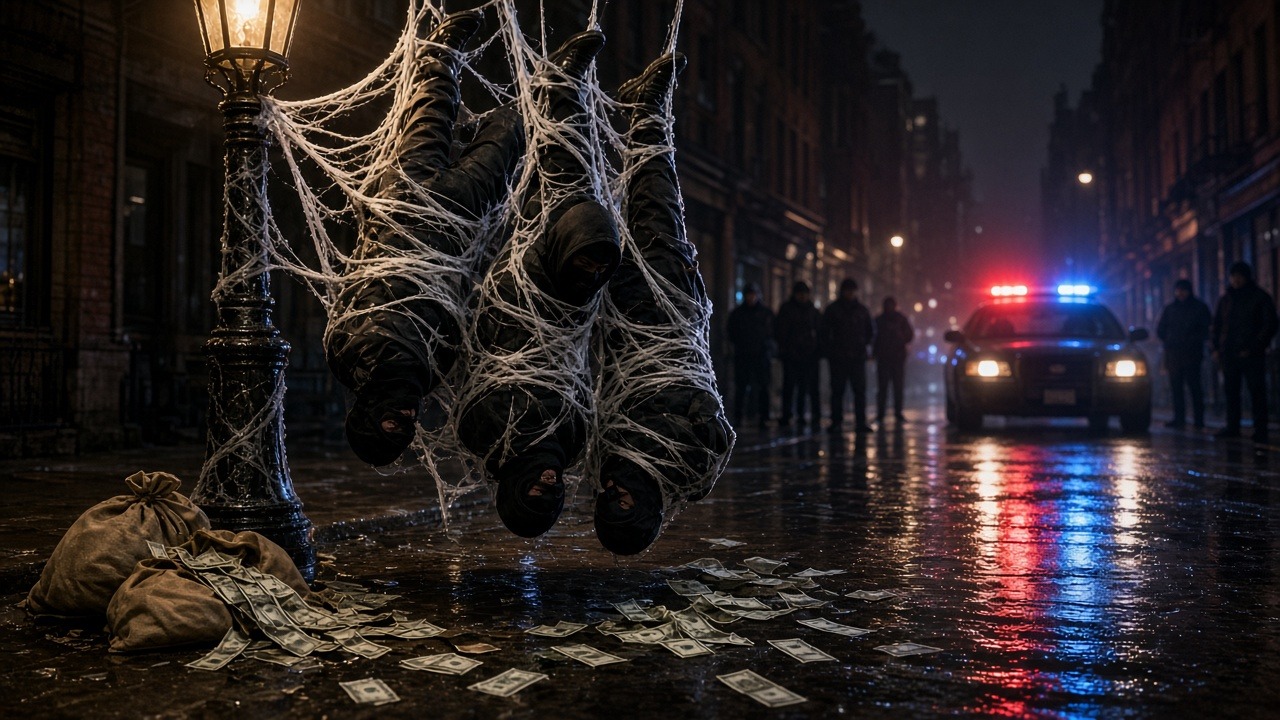
Here the quarantine metaphor gets complicated. Brand New Day was billed by Kevin Feige as the first time Holland’s Peter would be a “proper Spider-Man”, fighting street crime rather than the end of the world. It largely delivers on that, and with Avengers: Doomsday moved to December, Cretton has said, the film could stand alone.
Yet the guest list tells another story: the Punisher, the Hulk, Yelena, the Hand from Marvel’s Netflix era, a mayor from Daredevil: Born Again, and Jean Grey ahead of Marvel’s planned X-Men film. Cretton denied that Jean was a mandated set-up, saying she became the “perfect” choice once Sink was suggested. But it is hard to watch Jean leave the city at the end without hearing the gears of Phase Seven turning. Empire’s John Nugent, broadly positive, felt the second half lost momentum because of these wider ties. Rolling Stone’s David Fear warned that Peter risked becoming a supporting player in his own film. Both points land.
The Sony side is just as tangled. The writers have said they first wanted the shape-shifting Chameleon as the villain, but he had already been used in Sony’s Kraven the Hunter. Marvin Jones III, who voiced Tombstone in Into the Spider-Verse, plays him in live action here, only briefly. And Feige has tied Miles Morales’s live-action arrival to the animated Beyond the Spider-Verse in 2027. Holland’s Peter now sits where two corporate continuities meet, and the film’s best scenes happen when it forgets that.
The film’s moral is that Peter must stop doing everything alone. The film itself, as an industrial object, was never allowed to try.
Weaknesses
To gather the complaints in one place: it is too long. The first act is overloaded with set-up. The “Sara” thread depends on Metzger lying conveniently. TheWrap’s William Bibbiani, an admirer, still found the villain’s plan illogical. MJ’s arc, however well acted, is by design mostly reaction. And the closing sting, in which Ned’s Spidey Tracker app picks up a sighting away from Earth, points away from the street-level intimacy the film worked so hard to build.
Legacy
Whatever its flaws, Brand New Day has already rewritten the record books. Box Office Mojo puts its worldwide gross at about $2.51 billion as of 12 October 2026. That makes it the highest-grossing film of 2026 worldwide, well ahead of Christopher Nolan’s The Odyssey, and the third-highest-grossing film ever behind Avatar and Avengers: Endgame, unadjusted for inflation. Its $360 million North American opening is the largest on record, and it has passed Star Wars: The Force Awakens to become the top domestic earner of all time. In the UK and Ireland it opened to £36.4 million, which Variety reported as the third-biggest opening in UK history.
Critics were largely positive, if not ecstatic: around 90 per cent on Rotten Tomatoes, a Metacritic score in the mid-60s, and an “A” CinemaScore. Awards talk is modest. Forecasters such as Gold Derby see visual effects and sound as its likeliest Oscar categories, in a crowded field.
Its real legacy may be tonal. It shows that a blockbuster can be built around loneliness, and that audiences will turn up in huge numbers for a superhero who spends much of his film sad.
Now on digital
Spider-Man: Brand New Day (12A, 145 minutes) has been available to buy or rent on digital in the UK since 6 October 2026, on platforms including Amazon Prime Video and Apple TV. Launch prices were reported at £15.99 to rent and £19.99 to buy. The 4K UHD, Blu-ray and DVD editions follow on 14 December 2026, according to Sony Pictures Home Entertainment’s UK announcement. The film is available at home in up to 4K Dolby Vision and Dolby Atmos: reason enough for a second viewing, if only to listen for those missing notes in Giacchino’s theme.
The Verdict in Brief
A record-breaking blockbuster that is bravest when it sits with Peter’s loneliness, and weakest when the wider Marvel machine crowds back in.
Watch the Official Trailer
Revisit the official trailer for Spider-Man: Brand New Day, the first full look at Peter Parker’s lonelier new chapter.
Does Brand New Day’s focus on loneliness make it the most grown-up Spider-Man film yet, or did the guest stars pull it off course? Tell us in the comments.