
Listen to this article (about 17 minutes), narrated by The British Time Master, an original AI voice.
One arrived in cinemas in October 1962, the other on BBC television in November 1963. Now, with Bond just turned 64 and Doctor Who turning 63 next month, as the world waits to meet the next 007 and the TARDIS waits for its next era, we ask how Britain’s two great screen heroes keep being reborn with new faces, and why they never truly die.
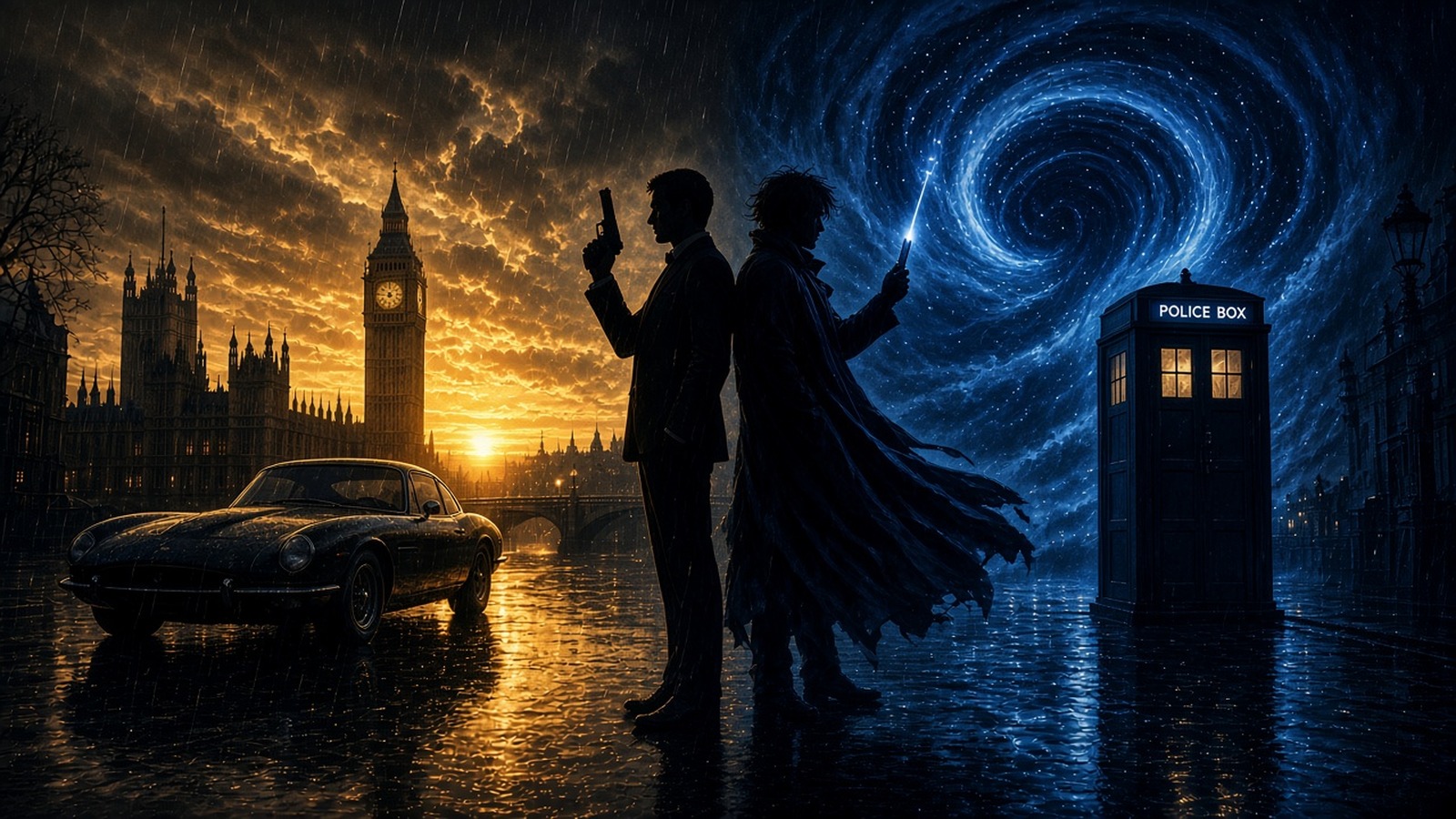
Britain has given the screen many heroes, but only two have become something closer to institutions. One wears a dinner jacket and carries a licence to kill. The other travels in a police box that is bigger on the inside. James Bond and Doctor Who arrived within thirteen months of each other in the early 1960s, one in the cinema and one on television, and between them they have shaped how the world pictures British adventure ever since. They are, quite simply, the two pillars of British entertainment.
And this autumn, both pillars are in the news at the same moment. The search for the next 007 has reached its final stage, while Doctor Who approaches its November anniversary with its own future being decided behind closed doors. It feels like the right time to ask what these two heroes share, and why, after all these years, they still refuse to die.
Thirteen months that changed British screens
Dr. No opened at the London Pavilion on Piccadilly Circus on Friday 5 October 1962, with Sean Connery introducing himself across a chemin de fer table with the line that has echoed for 64 years since: “Bond. James Bond.” Ian Fleming himself attended the gala screening that evening. By coincidence, it was the same day The Beatles released their first single, Love Me Do, a neat reminder that Britain was about to export far more than spies.
Just over a year later, at 5.16pm on Saturday 23 November 1963, BBC Television broadcast the first episode of Doctor Who, An Unearthly Child. William Hartnell played a mysterious, prickly traveller in time and space, and a schoolteacher, a science teacher and his granddaughter stepped through the doors of a battered police box. Nobody could have guessed that the programme would still be running in the next century.
Both began as modest productions with big ideas: Bond built on Fleming’s novels by producers Albert R. Broccoli and Harry Saltzman, Doctor Who a BBC drama for Saturday teatime. Both became global brands.
The secret weapon: a new face
If there is one thing that unites them above all else, it is the recast. Most franchises fear losing their star. Bond and Doctor Who turned it into an art form.
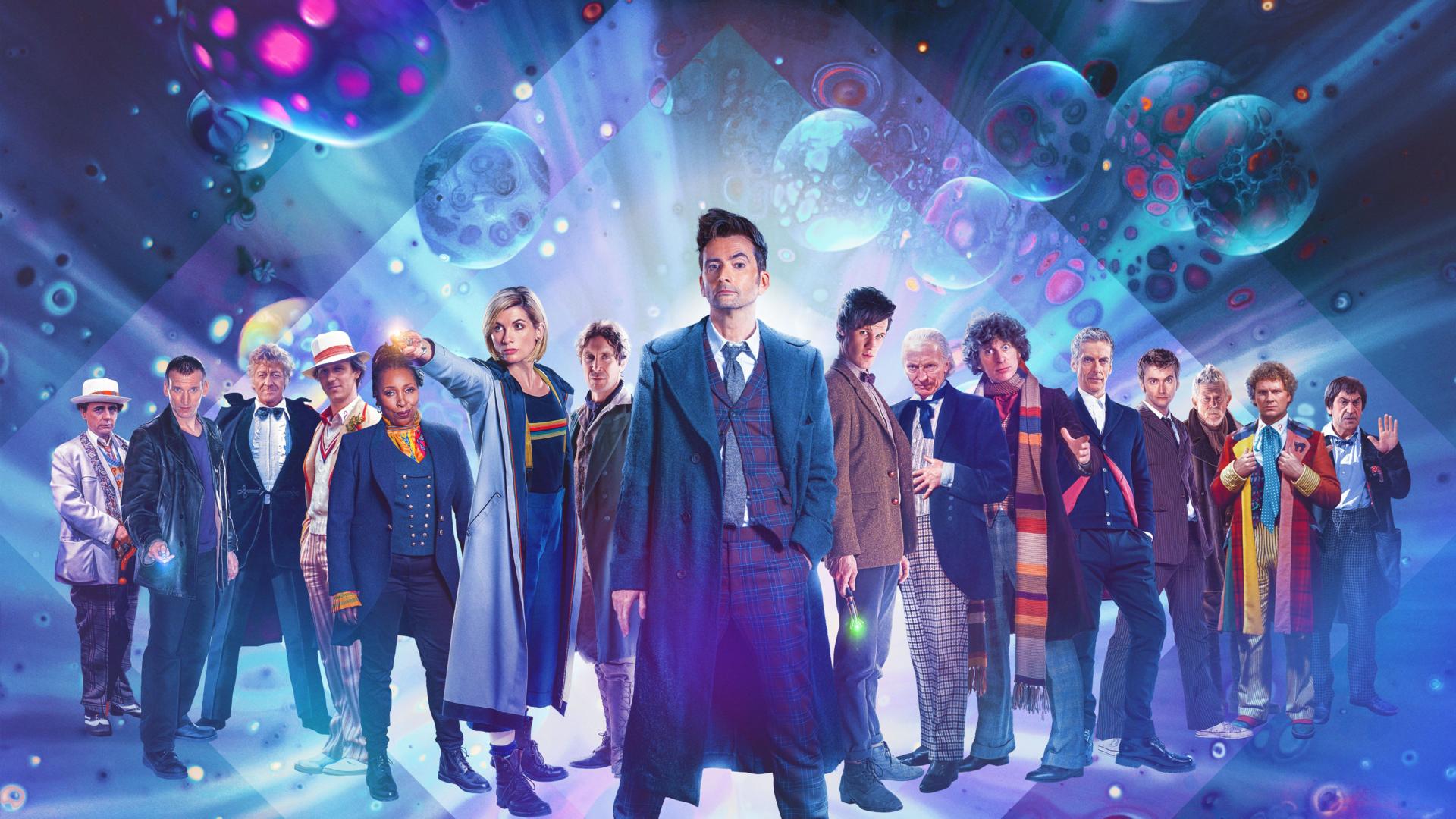
Doctor Who found its answer first, and it was a stroke of genius. On 29 October 1966, at the close of The Tenth Planet, William Hartnell’s Doctor collapsed and transformed into Patrick Troughton. What fans now call regeneration was born, and with it a way for the show to renew itself indefinitely. Today marks sixty years since that first change of face. On 23 November 2026, Doctor Who turns 63, and it is officially the longest-running science-fiction series on television: Guinness World Records lists it as the most prolific science-fiction TV series by number of episodes.
Fourteen actors have led the official television series: William Hartnell (1963–66), Patrick Troughton (1966–69), Jon Pertwee (1970–74), Tom Baker (1974–81), Peter Davison (1981–84), Colin Baker (1984–86), Sylvester McCoy (1987–89), Paul McGann in the 1996 television film, a BBC co-production with Universal, Christopher Eccleston (2005), David Tennant (2005–10), Matt Smith (2010–13), Peter Capaldi (2013–17), Jodie Whittaker (2017–22) and Ncuti Gatwa (2023–25). Tennant was even reborn twice, returning as the Fourteenth Doctor for the 60th anniversary specials in 2023 before an unprecedented “bi-generation” brought Gatwa’s Fifteenth Doctor into being.
The family has secret branches, too. John Hurt played the War Doctor, a hidden incarnation revealed for the 50th anniversary in 2013, and Jo Martin appeared in 2020 as the Fugitive Doctor, a previously unknown version of the Time Lord. Then, at the close of Gatwa’s final episode in May 2025, the Doctor regenerated into a familiar face: Billie Piper, credited simply as “introducing Billie Piper”. The BBC has said only that just how and why she is back “remains to be seen”, so whether she is the next Doctor has not been officially confirmed.
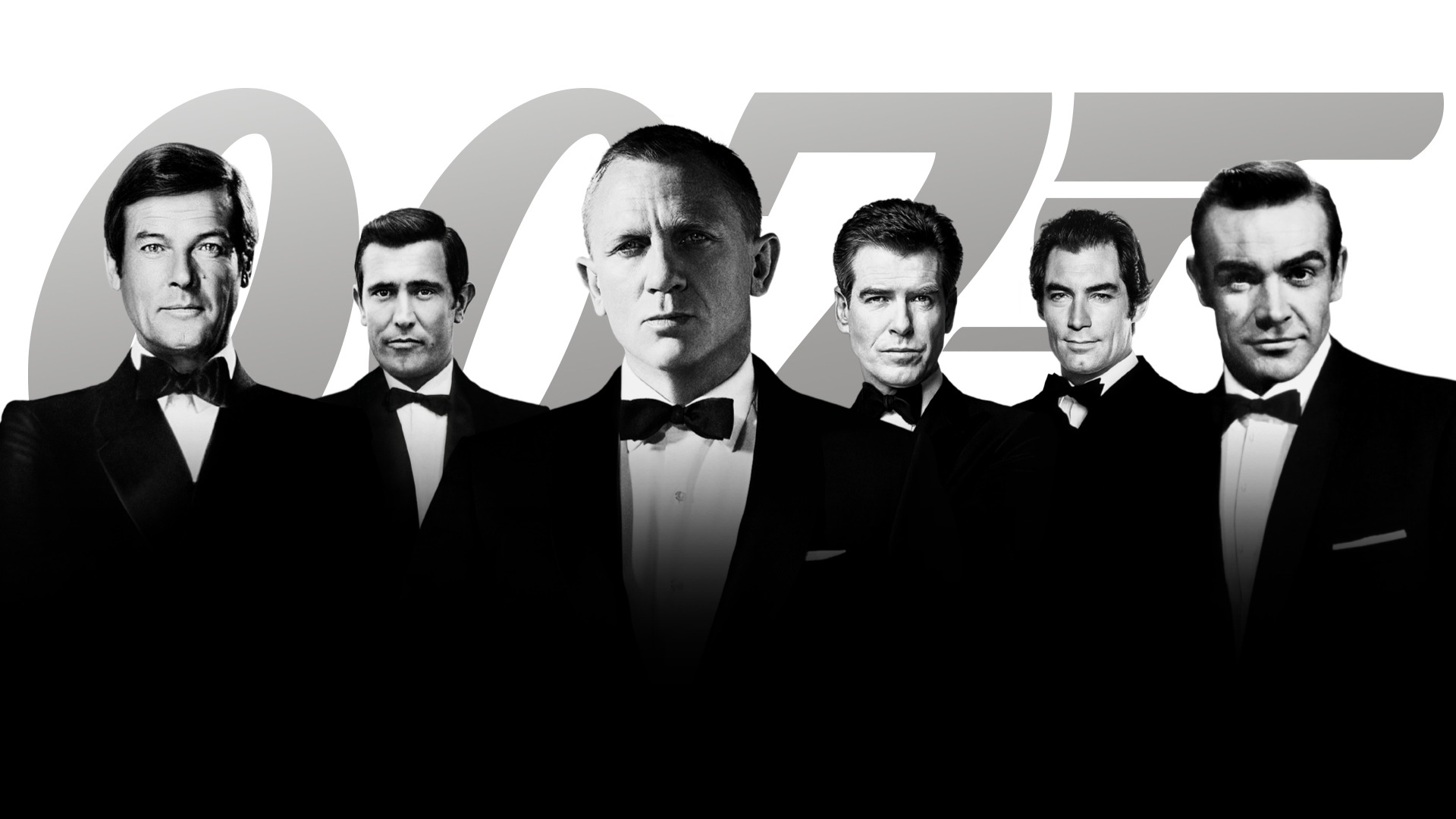
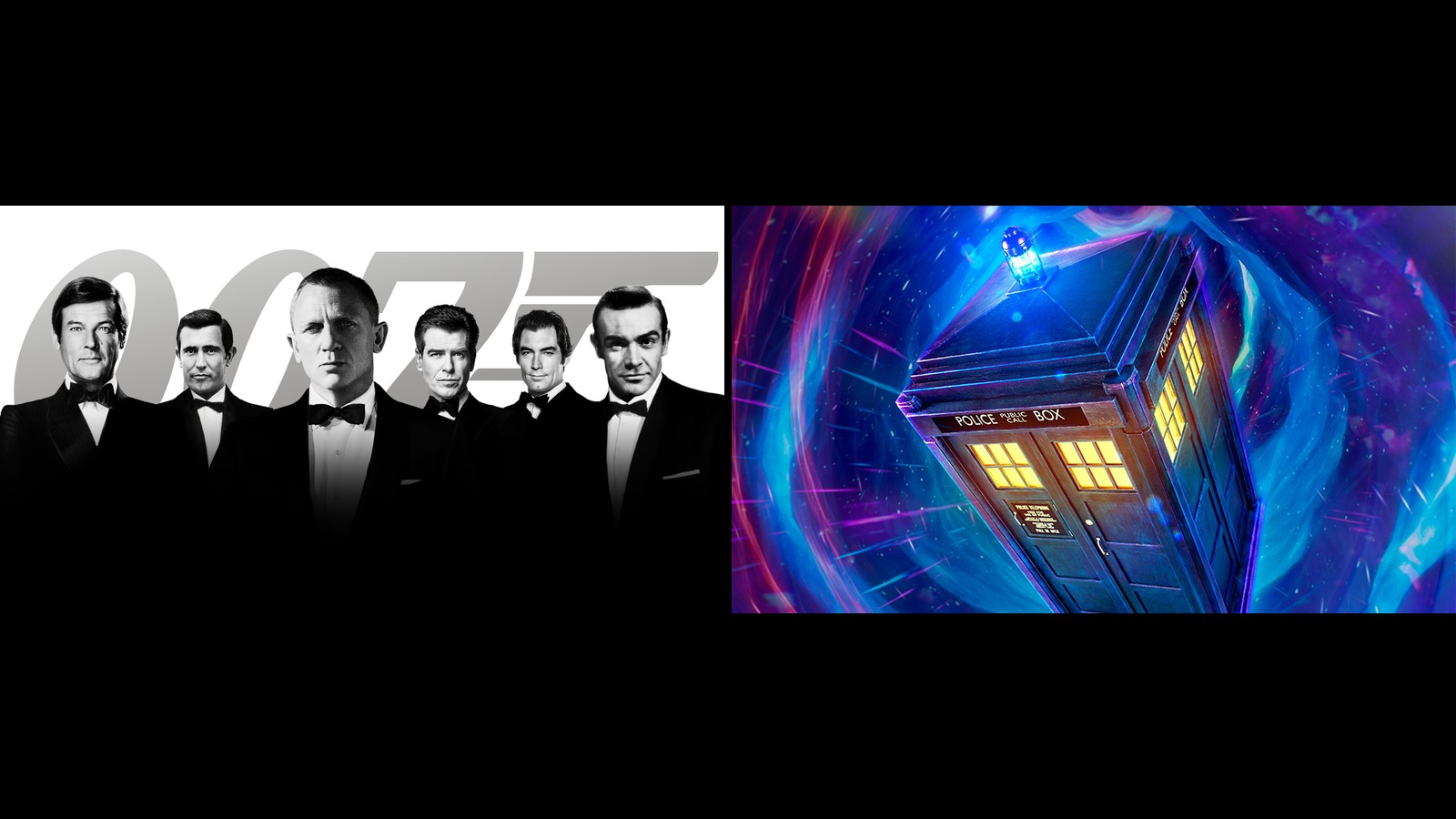
Bond’s solution was simpler and bolder: a new actor, the same man. George Lazenby followed Connery in On Her Majesty’s Secret Service in 1969, and since then Roger Moore, Timothy Dalton, Pierce Brosnan and Daniel Craig have each taken the role. Six actors across 25 official films, from Dr. No to No Time to Die.
The result, for both, is that every new lead becomes a national event. Newspapers run odds, fans argue in pubs and online, and the eventual announcement is treated almost like a royal birth. Each new actor brings a new tone, and each era is defined as much by its star as by its stories. Ask anyone in Britain who “their” Bond or “their” Doctor is and you will get an answer, usually with feeling.
The hunt for 007 reaches its final stage
That ritual is playing out right now. Amazon MGM Studios took creative control of the Bond franchise through a joint venture with Michael G. Wilson and Barbara Broccoli, announced in February 2025 and completed that March, with Wilson and Broccoli remaining co-owners. Producers Amy Pascal and David Heyman are on board, Denis Villeneuve is directing and Steven Knight is writing, while casting director Nina Gold has led the search for the new star.
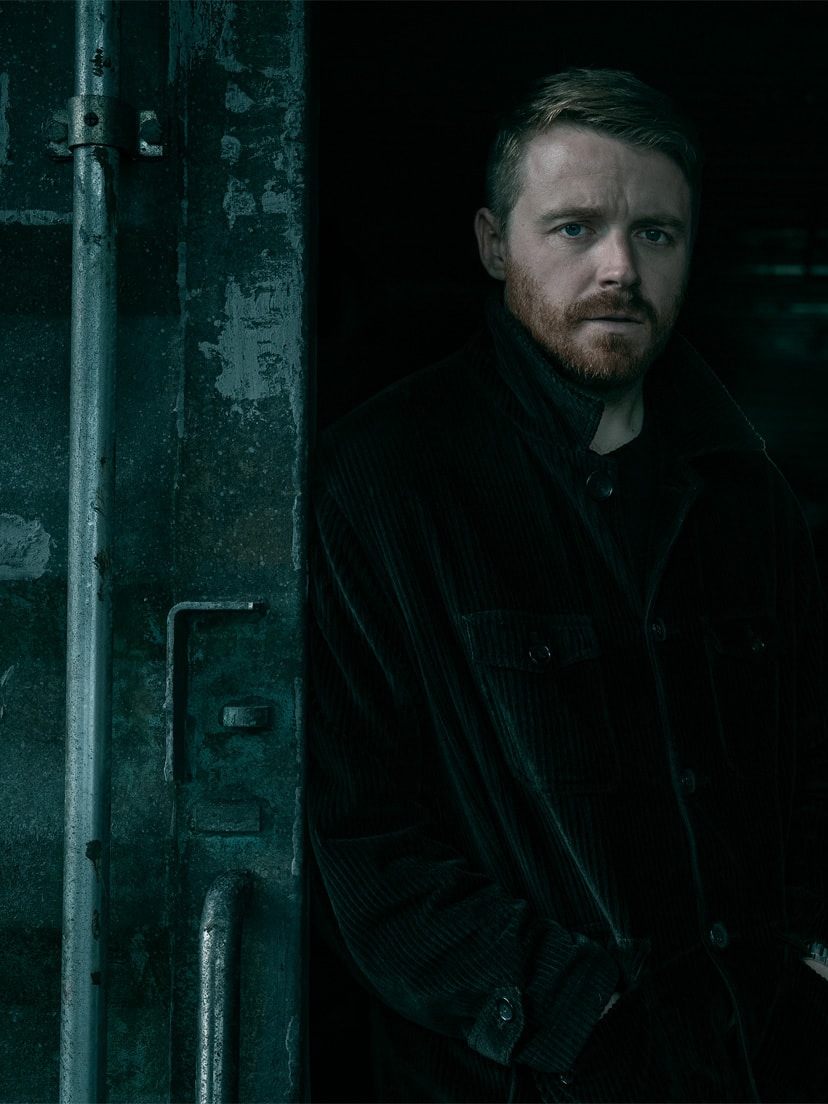
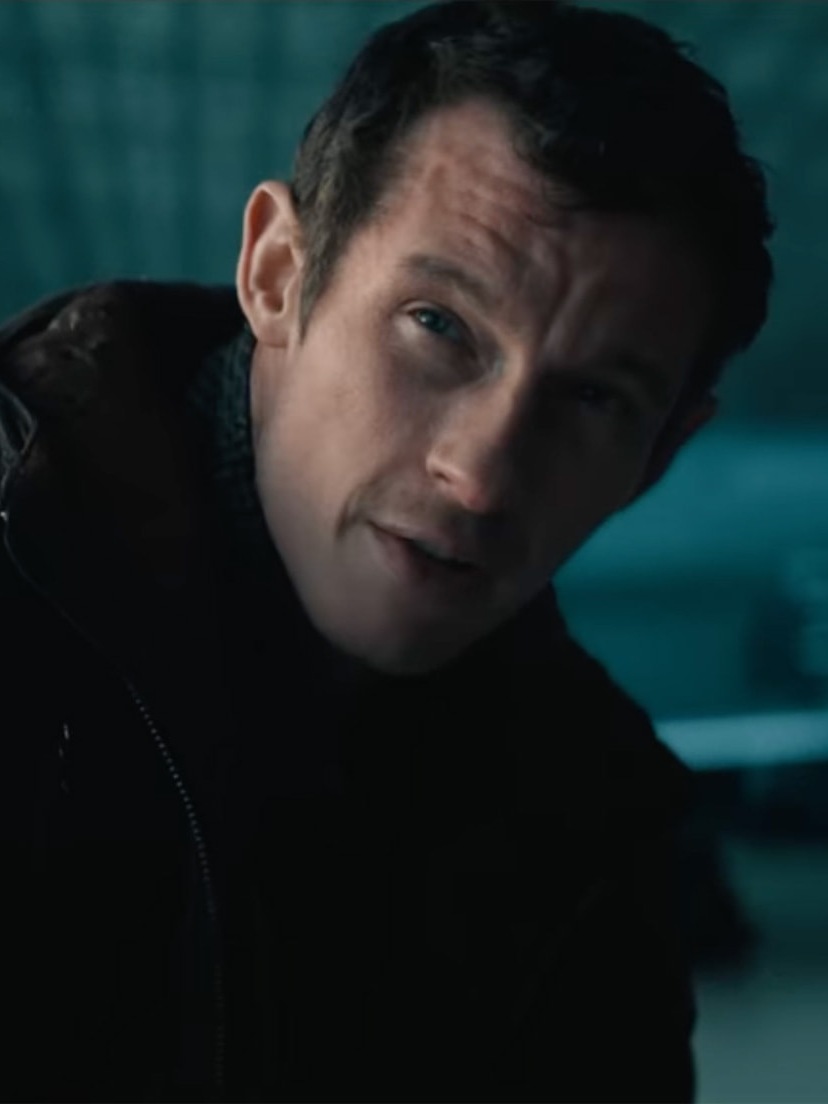
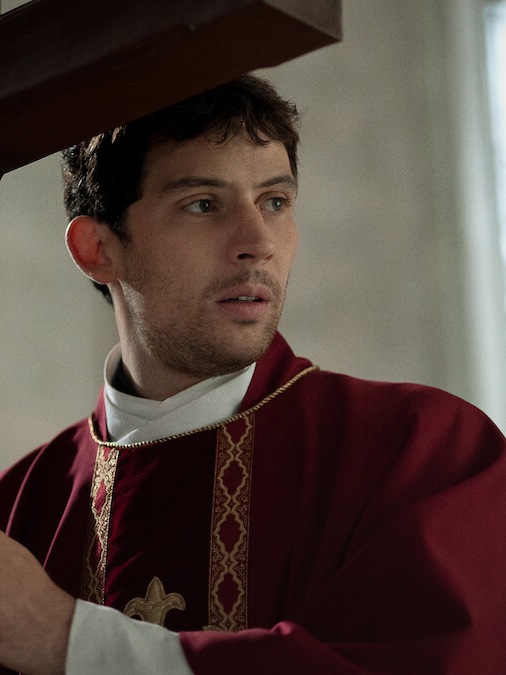
According to Deadline, at least four final screen-test offers were made for tests from late October, and three of those expected to test are reportedly Jack Lowden, Callum Turner and Josh O’Connor. The BBC and TheWrap have reported the same three names, with a fourth actor unnamed. The BBC described the tests as covering stunts, camera presence and dialogue. Amazon MGM has not confirmed any of these names, and Deadline reports there is no set timeline for a decision, though most expect one by the end of the year. Until the studio speaks, every name remains just that: a report.
The Doctor waits for a new era
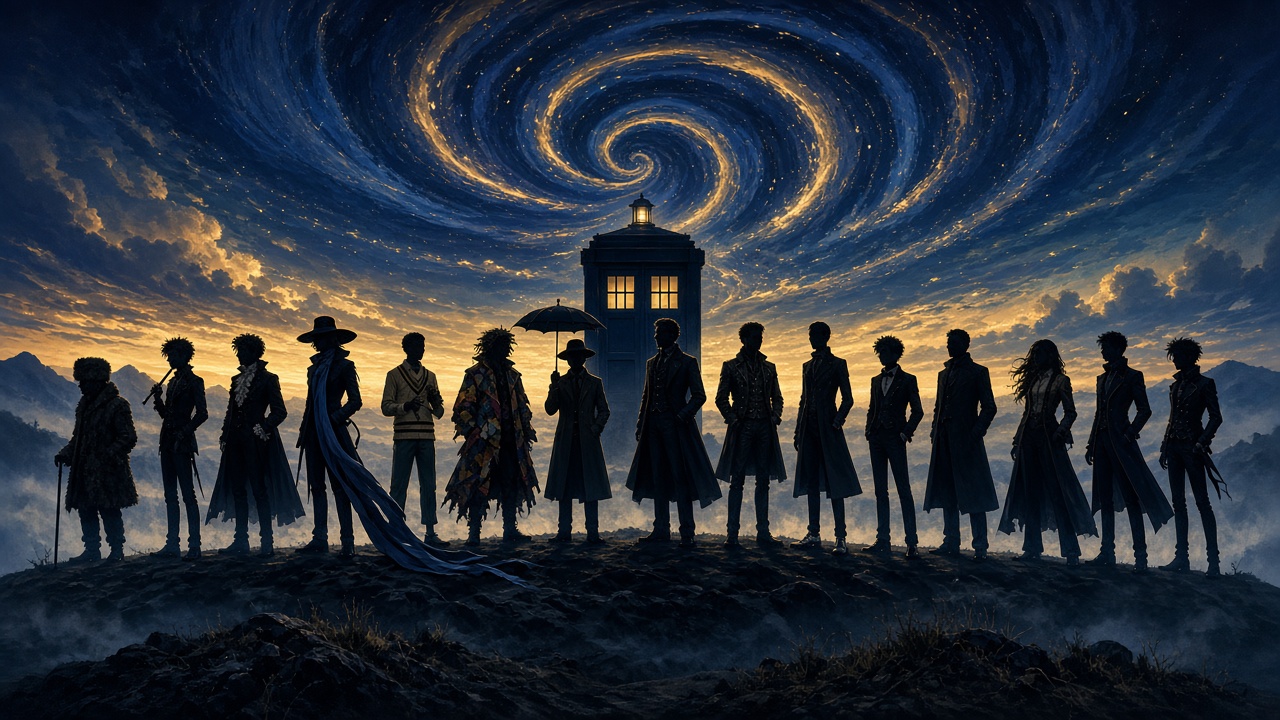
Doctor Who, meanwhile, is between lives. The BBC co-produced the most recent era with Cardiff’s Bad Wolf, with Disney+ as international partner from 2023, but Disney’s involvement ended in 2025 after 26 episodes. Ncuti Gatwa’s final series concluded in May 2025 with a surprise appearance from Billie Piper.
In June 2026 the BBC announced that the planned 2026 Christmas special would not go ahead and that the show would be put out to competitive tender, in line with its Charter requirements. Russell T Davies confirmed he was stepping down as showrunner. The BBC was clear that it retains all the intellectual property in Doctor Who, and that BBC Studios will continue to lead its global distribution.
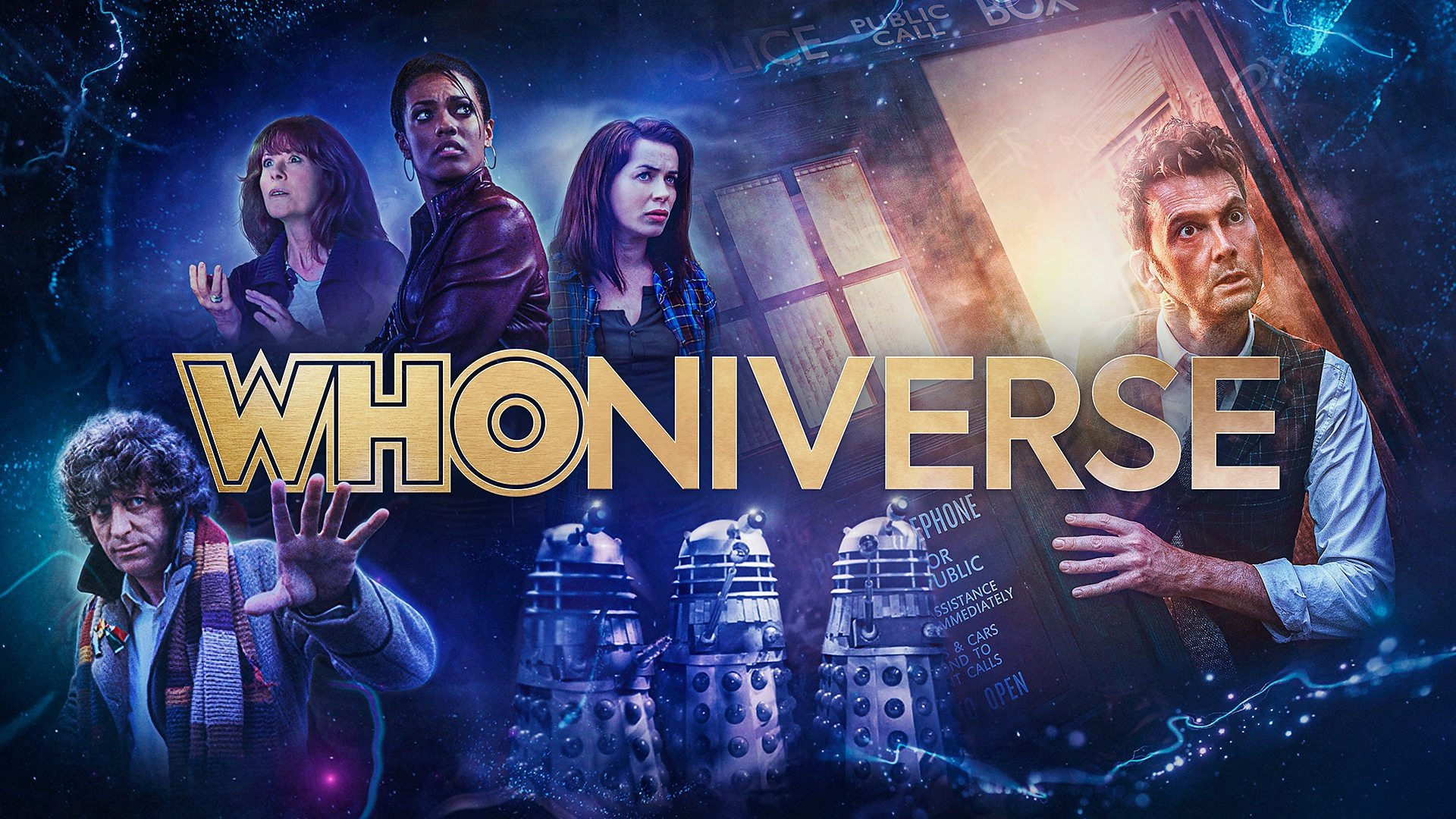
The tender deadline has now passed. Deadline has reported bids including one from Jed Mercurio’s Hat Trick Mercurio, and Radio Times reports that the BBC is aiming for the next series to air in the 2028/29 season. In the meantime, the BBC’s Whoniverse collection on iPlayer offers more than 800 episodes from across the show’s history and its spin-offs, and a new animated series for CBeebies is in production. As with Bond, the next face of the hero is yet to be revealed.
Crossing the line between cinema and television
Part of what makes these two so remarkable is how freely they have crossed into each other’s territory. Bond was born in the cinema, Doctor Who on television, yet neither has stayed put.
The Doctor reached the big screen first. Dr. Who and the Daleks in 1965 and Daleks’ Invasion Earth 2150 A.D. in 1966 starred Peter Cushing as a gentle, grandfatherly human scientist called Dr. Who, in bright colour on cinema screens at a time when the series itself was in black and white. They were made by Amicus, better known for horror, and remain cherished curiosities.
Nearly half a century later, Doctor Who returned to cinemas in spectacular style. The 50th anniversary special, The Day of the Doctor, was broadcast on 23 November 2013, fifty years to the day after the first episode. It was simulcast in 94 countries and shown in more than 1,500 cinemas, many in 3D, and Guinness World Records recognised it as the largest ever simulcast of a TV drama.
Bond, for his part, has been a familiar face in British television schedules for decades, and today his home is streaming as much as the cinema. With Amazon owning MGM, all 25 official Bond films are now available to stream on Prime Video in the UK. The spy who began at the London Pavilion now lives on a phone screen too.
The sound of Britain abroad
You can hum both of them, and that matters. The James Bond Theme was written by Monty Norman for Dr. No and arranged by a young John Barry, whose blend of jazz swagger and that menacing, twanging electric guitar became the sound of the spy film. Barry went on to score many of the series’ most celebrated entries, and the gun-barrel opening has become one of cinema’s great rituals.
The Doctor Who theme was composed by Ron Grainer and brought to life by Delia Derbyshire at the BBC Radiophonic Workshop. Working long before synthesisers were commonplace, she built it from tape loops, oscillators and treated sounds, creating something that sounded genuinely alien in 1963. It remains one of the most influential pieces of electronic music ever broadcast. Two themes, two very British feats of invention, both instantly recognisable from Tokyo to Toronto.
Q Branch, the TARDIS and the Company They Keep
Every hero who refuses to die needs a few constants, and here the two pillars sit side by side almost perfectly.
Bond’s belong to Q Branch. Major Boothroyd first appeared in Dr. No, played by Peter Burton, but it was Desmond Llewelyn, arriving in From Russia with Love in 1963, who made Q a national treasure across seventeen films, patiently demonstrating gadget-laden briefcases to a man who never quite listened. John Cleese and Ben Whishaw have since taken up the role. Then there is the car. The Aston Martin DB5 first appeared in Goldfinger in 1964, complete with revolving number plates, an oil slick and a bulletproof rear screen, and it has returned to the series again and again. It has even been reborn off screen: Aston Martin, working with Eon Productions, built 25 new Goldfinger continuation cars with working gadgets.
The Doctor’s kit is humbler and stranger. The sonic screwdriver made its debut in Fury from the Deep in 1968, when Patrick Troughton’s Doctor used it to undo some screws, and it has been at almost every Doctor’s side since. The TARDIS, a police box that is bigger on the inside, has carried every one of them since 1963. And in October 1977, in The Invisible Enemy, Tom Baker’s Doctor and Leela gained K9, the robot dog voiced by John Leeson, who returned alongside Sarah Jane Smith in School Reunion in 2006.
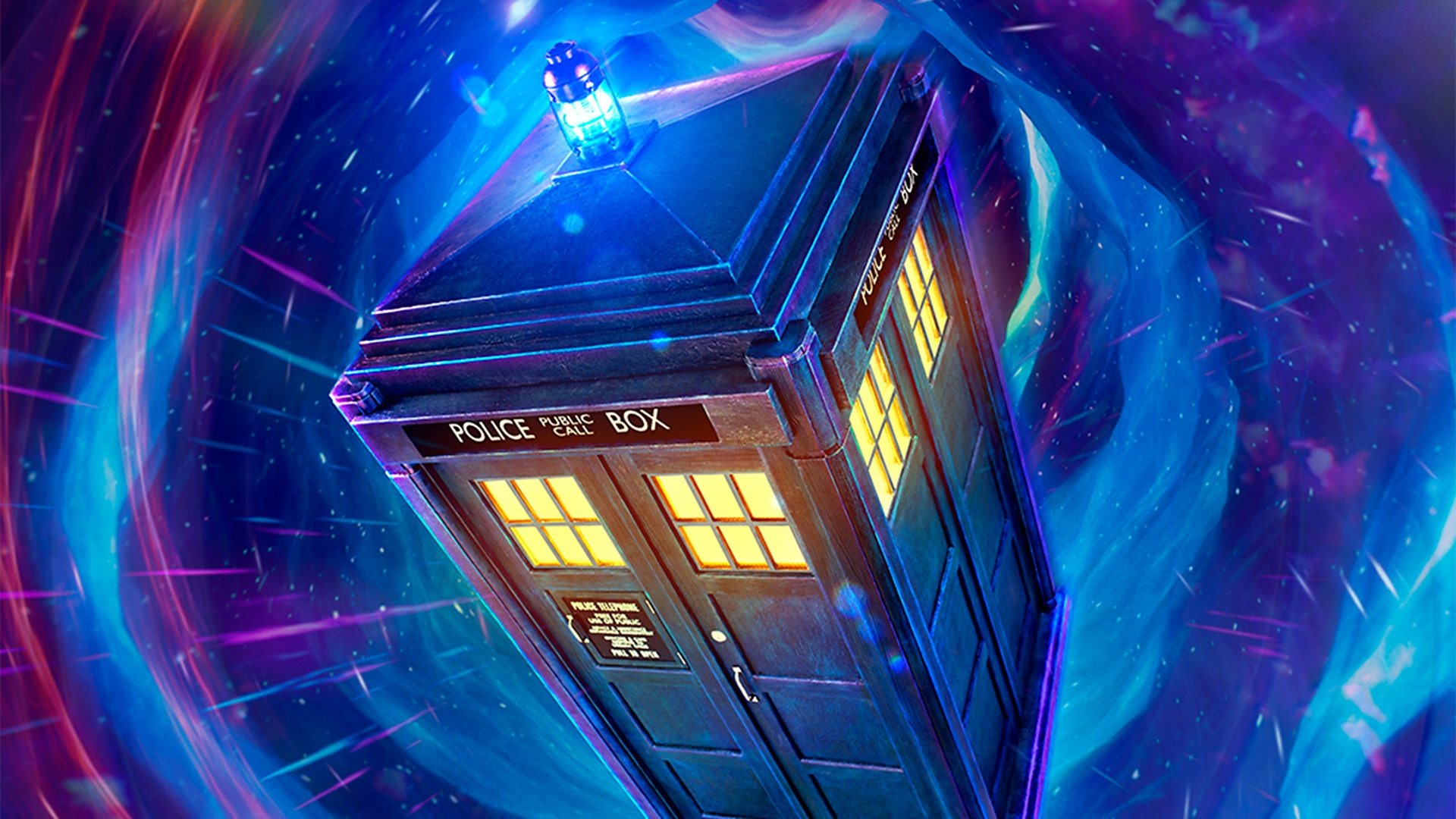
The company they keep has changed with the times, too. The women of the early Bond films were often written as glamour first, but the roles have grown in substance over the decades. Judi Dench became the first woman to play M in GoldenEye in 1995, Naomie Harris reinvented Eve Moneypenny for Skyfall, and in No Time to Die Lashana Lynch’s Nomi was a 00 agent who had been given the 007 number.
The Doctor’s human companions are the show’s eyes and heart, and they change as often as the Doctor does, from teachers Ian Chesterton and Barbara Wright in 1963 to the friends of the modern era. Each one leaves, and another steps through the doors. Like the heroes themselves, the gadgets and the friends are renewed, never retired for good.
Moments that belong to everyone
Both heroes have become part of the national story. In the summer of 2012, Daniel Craig’s Bond escorted Queen Elizabeth II, apparently by parachute, into the London Olympic Stadium on 27 July, in a sequence watched around the world. A year later, The Day of the Doctor drew 10.6 million viewers at its peak on BBC One, gathering families around the television in a way few dramas still can.
There are smaller rituals too, from hiding behind the sofa when the Daleks appear to arguing over the best Bond song. These are shared memories, passed from parents to children, and that is why they endure.
Why they will never truly die
Plenty of countries have created famous screen heroes. What makes Bond and the Doctor unusual is that neither belongs to a single actor, a single decade or even a single medium. They are roles designed to be reborn. Each generation gets its own version, shaped by its own times, while the core stays recognisably the same: the wit, the music, the sense that Britain can still produce adventure on a grand scale.
That is why the next announcements matter so much. Somewhere, an actor is waiting for a phone call that will change his life, and somewhere else a production team is preparing to lead the TARDIS into its next era. When those news stories break, they will not just be casting decisions. They will be the latest rebirth for two heroes who have already outlived every actor who first played them.
Sixty-four years after Dr. No, and almost sixty-three after An Unearthly Child, the two pillars still stand. Faces change, eras end, and still they live on. Even in death, these heroes will never die.