
There is no gentle way to describe the premise of Whalefall. A young diver searching for his father’s remains is swallowed by a sperm whale and has roughly an hour of air to get out. It is a pitch that sounds like a dare, and Brian Duffield—adapting Daniel Kraus’s novel with the author—takes it with complete seriousness.
That commitment is the film’s great strength and, at times, its burden. Inside the whale, this is a suffocating, squirm-inducing ordeal. Outside it, in the flashbacks that explain who Jay is and why his father still looms over him, the film reaches for emotional weight it does not always earn.
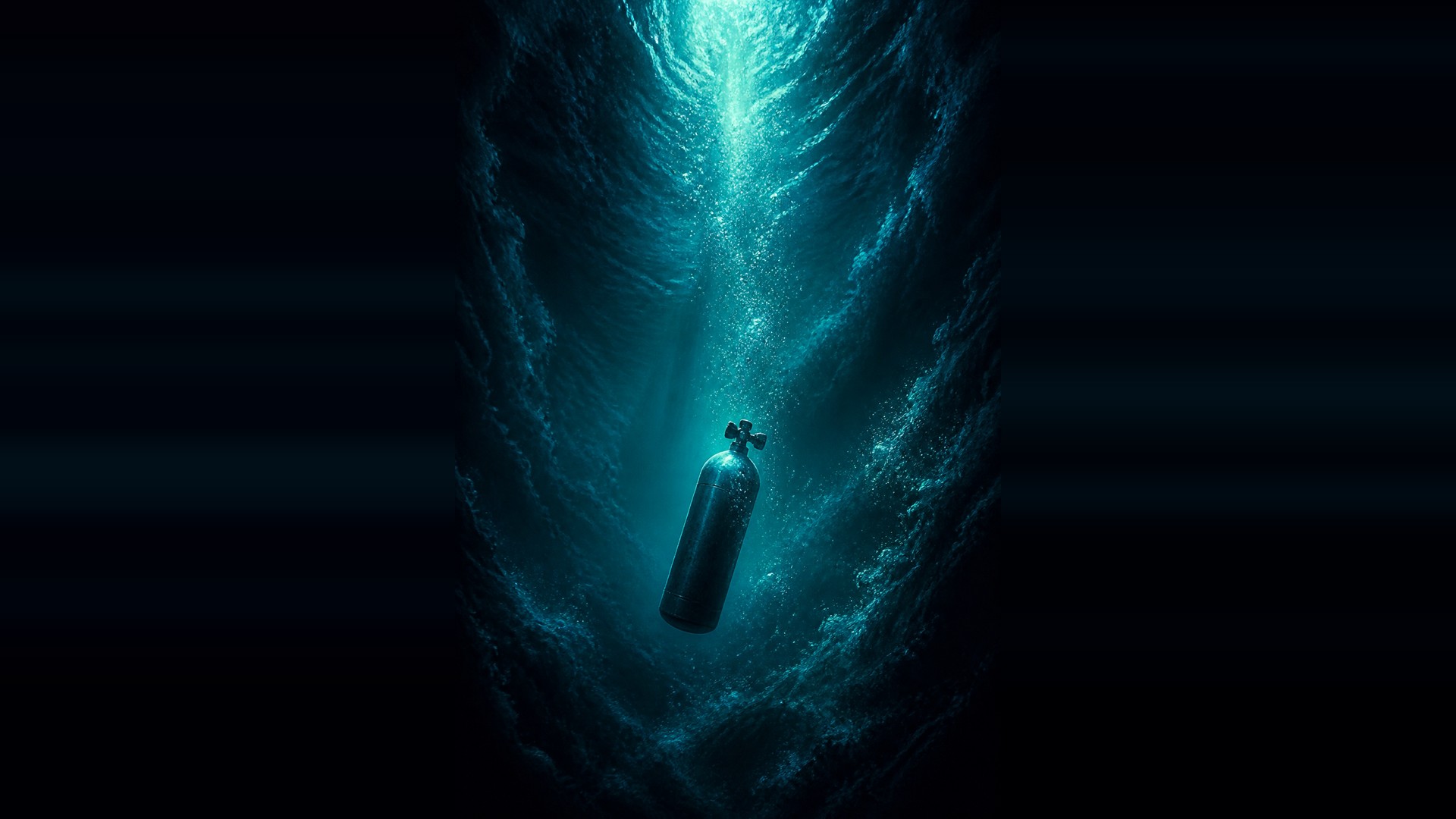
Whalefall is at its most gripping when it trusts its outrageous premise and lets the walls close in.
Movie at a Glance
- UK and US cinemas: 16 October 2026
- Certificate: 15 in the UK; PG-13 in the US
- Runtime: 1 hour 46 minutes
- Director: Brian Duffield
- Screenplay: Brian Duffield and Daniel Kraus, from Kraus’s novel
- Starring: Austin Abrams, Josh Brolin, Elisabeth Shue, Jane Levy and John Ortiz
- Distributor: 20th Century Studios
- Genre: Survival thriller
Viewer Match
- Best for: Viewers who love high-concept survival stories and visceral, physical filmmaking.
- Maybe skip if: Confined spaces, bodily horror or gore make you queasy, or you dislike heavy use of flashbacks.
- Mood and pace: Claustrophobic, urgent and often gross, with reflective pauses that slow the clock.
- Cinema or streaming?: Cinema: the scale of the creature against one human body is the point.
- Spoiler level: None: premise only, as revealed in the official synopsis.
Inside the Belly of the Beast
When Whalefall stays with Jay in the dark, it is one of the most physically uncomfortable mainstream films of the year—in a good way. Duffield builds the interior of the whale as a hostile, shifting environment, every chamber a new problem of pressure, oxygen and anatomy. Practical set work gives the space a wet, tactile reality that makes the absurd feel tangible.
Austin Abrams carries almost the entire film on his shoulders and is excellent. His performance is largely physical—breathing, bracing, improvising—yet he keeps Jay’s fear and stubbornness legible even when he has no one to talk to.
The Weight of a Father
Josh Brolin’s Mitt is the ghost in the machine: a demanding, charismatic father whose lessons become Jay’s survival kit. The idea is strong, and Brolin brings warmth and edge to a role built mostly from memory. The problem is frequency. The film returns to the surface so often to explain feelings that the pressure inside the whale keeps leaking away.
There is a better, leaner version of this story in which the father exists only in Jay’s instincts. The film Duffield has made is more earnest and more sentimental, and how much that works will depend on your tolerance for a survival thriller that wants to make you cry as well as flinch.
Commitment to the Bit
Implausibility comes with the territory, and the film is wise not to apologise for it. Duffield, whose genre work has always favoured a single bold idea, plays the premise straight and lets the audience decide how far to go along. Most of the time, it is worth the ride.
What lingers is the sensation: the darkness, the breathing, the creeping awareness of time running out. That is a genuine achievement, and it makes Whalefall a memorable, if uneven, piece of big-screen genre filmmaking.
Spoiler-Free Verdict
Whalefall turns an outrageous idea into a gripping, visceral survival ordeal anchored by a superb Austin Abrams. Repetitive flashbacks and sentimentality dilute the tension, but the time spent inside the whale is unforgettable.
- Performances: 8/10
- Direction: 7.5/10
- Screenplay: 6/10
- Score: 7/10
- Cinematography: 8/10
- Entertainment Value: 7.5/10
- Overall score: 7.5/10
Star rating: 3.75/5
Verdict badge: One for Fans
One-line verdict: A gloriously committed survival nightmare that is strongest when it stops explaining and simply holds its breath.
Watch the Official Trailer
The official trailer may reveal more than this spoiler-free review.
Would you rather a survival thriller stayed in the moment, or used flashbacks to build its emotional story? Share your thoughts with Movieversalfilm—and keep the spoilers under wraps.