
Snow closes over the road. Beyond the headlights, the night seems to go on forever. Somewhere ahead lies Raccoon City, and Bryan has a delivery to finish. Resident Evil (2026) builds its horror around a wonderfully cruel idea: the man carrying the story is almost certainly the least prepared person for the job. With Austin Abrams at the centre of the chaos, Zach Cregger’s reboot makes vulnerability its most valuable weapon.
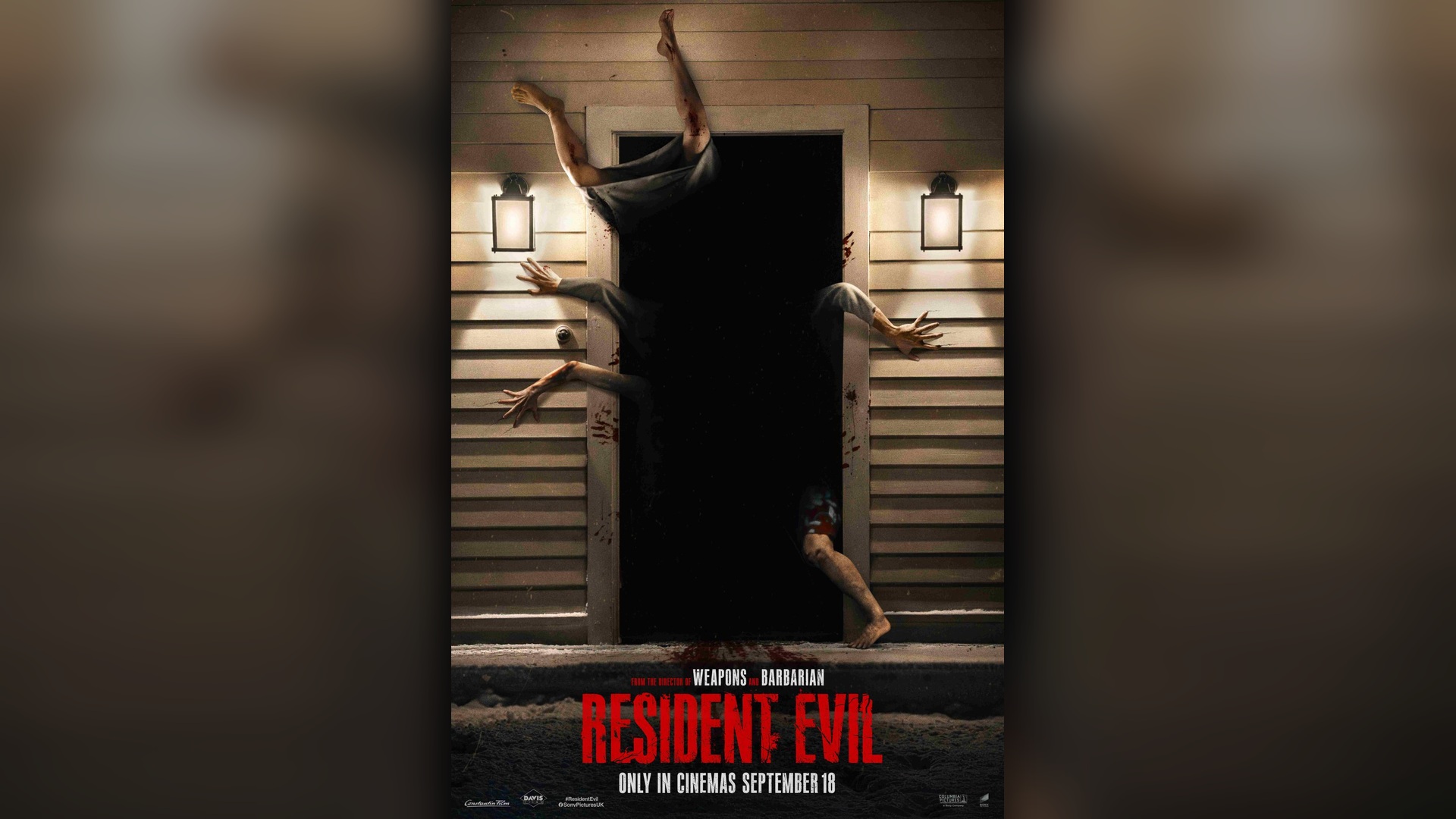
Fear has more room to breathe when the person holding the gun would rather be anywhere else.
Movie at a Glance
- Film: Resident Evil (2026)
- Director: Zach Cregger
- Screenplay: Zach Cregger and Shay Hatten
- Principal cast: Austin Abrams, Zach Cherry, Kali Reis and Paul Walter Hauser
- Runtime: 90 minutes
- UK certificate: 15
- US and UK cinema release: 18 September 2026
- Distributor: Sony Pictures
- Premium presentation: IMAX screenings available; check your local cinema.
Viewer Match
- Best for: Fans of grotesque creature horror who want a vulnerable protagonist and a compact survival story.
- Maybe skip if: You prefer sustained psychological dread or a close adaptation of established game characters.
- Mood and pace: Macabre, anxious and darkly comic; a measured introduction builds towards increasingly extravagant danger.
- Cinema or streaming? Consider cinemas for the creature spectacle and communal horror-comedy experience; wait if character drama matters more to you.
- Spoiler level: Spoiler-free: no major revelations, character fates or ending details.
Resident Evil (2026): a delivery into the dark
Bryan is a medical courier, an ordinary man trying to get through an increasingly extraordinary night. The premise is pleasingly direct. There is a job to complete, a destination to reach and a growing suspicion that neither will matter if he cannot survive the next few minutes.
That modest starting point gives Cregger’s film its strongest dramatic advantage. Fear comes easily when competence cannot be taken for granted. A weapon is only useful if you can operate it. A route out is only reassuring until something blocks it. Every small difficulty has the potential to become a catastrophe.
For a franchise so rich in mythology, this is an inviting way back in. The immediate stakes need little explanation: keep moving, make a decision, hope it is the right one.
Austin Abrams: the right man for the wrong night
Abrams gives Bryan the sort of nervous, scruffy appeal that a film like this needs. His awkwardness makes the character accessible; his flashes of kindness give the ordeal something human to threaten. This is a protagonist whose uncertainty is part of the attraction.
The comedy grows naturally from that mismatch between person and predicament. Bryan’s panic, frustration and imperfect reactions offer relief without requiring him to become a swaggering action hero. There is pleasure in watching someone attempt a practical solution while plainly wishing that somebody more qualified would turn up.
That humour also sets the terms of the experience. Anyone hoping for unbroken dread may find the comic release too generous. For viewers who enjoy horror with a streak of exasperated absurdity, it is a substantial part of the appeal.
Paul Walter Hauser, Zach Cherry and Kali Reis join the principal cast, but the film belongs to Bryan. Its supporting world is comparatively spare, leaving Abrams to carry much of the emotional weight.
Zach Cregger’s direction: survival as a series of bad choices
Cregger and co-writer Shay Hatten shape the journey around obstacles, limited resources and the pressure to keep going. It is a strong foundation for a Resident Evil adaptation because it understands how much tension lives in the business between the monsters.
The story moves through successive environments, with each apparent advance introducing another problem. That structure gives the film a clear purpose and an escalating scale. At 90 minutes, it also has the good sense to keep its ambitions compact.
The trade-off is character depth. A chain of ingenious predicaments can keep the plot moving without giving the people inside it much room to grow. Bryan is easy to root for, but the emotional material has less space to develop than the machinery of his ordeal.
The rhythm is not simply relentless. An initially measured build gives way to greater extravagance, with practical frustrations interrupting the forward rush. Those interruptions can sharpen the suspense; they can also make the journey feel repetitive when the next problem resembles the last.
Cinematography and production design: nowhere feels safe
Dariusz Wolski’s night photography gives the film a strong visual identity. Snow, headlights and isolated buildings turn the landscape into a series of uncertain promises. A light in the distance suggests shelter, but shelter and safety are very different things.
The visual clarity matters. Horror needs darkness, but it also needs enough information for an audience to imagine what might happen next. Knowing where the door is can be as important as knowing what is coming through it.
Camera positions close to Bryan, including views familiar from games, reinforce that restricted perspective. The spaces become problems to negotiate: entrances, barriers and routes that may or may not lead anywhere useful. This approach gives the action a physical logic and makes production design part of the suspense.
The larger editorial challenge is balancing orientation with surprise. The film’s compact, encounter-driven construction offers a strong organising principle, even when its momentum risks making the transitions between situations more memorable than the dramatic connections.
Monsters, music and a taste for the grotesque
Mutation gives this Resident Evil its most fertile visual territory. A familiar human outline can become something unreliable, and each new creature can change the rules of an encounter. The attraction lies as much in dreadful invention as in the number of threats.
The creature effects invite the sort of horrified fascination that makes body horror such a particular pleasure. For the right audience, the question becomes what fresh indignity the human form might suffer next. For everyone else, the grotesquerie may be a reason to choose another screening.
Hays and Ryan Holladay’s score adds an uneasy pulse to the proceedings. Music helps hold the tension through the shifts between fear and comedy, keeping the atmosphere unsettled when the dialogue briefly releases it.
Yet spectacle has limits. A memorable monster can dominate a sequence without making its human stakes any richer. The film’s strongest recommendation remains the inventiveness of the ordeal; its clearest reservation is how much emotional substance survives beneath it.
Does the reboot capture the spirit of Resident Evil?
Cregger’s approach places the emphasis on the experience of survival: uncertainty, incomplete knowledge and progress that never feels secure. A new central character gives that approach freedom, while making the story approachable for viewers without years of game lore behind them.
Fans looking for a close retelling of a favourite storyline may feel differently. Familiar characters carry their own emotional appeal, and an original journey cannot automatically replace it. The reboot’s success therefore depends on what each viewer wants the name Resident Evil to promise.
For creature-horror fans, there is a persuasive case here: an appealingly vulnerable lead, a compact running time and a director willing to let terror become extravagantly strange. The screenplay’s slender emotional reach keeps the recommendation measured.
The strongest idea remains the simplest. Put an ordinary person somewhere profoundly wrong, then make every step towards escape a little harder. Raccoon City supplies the nightmare. Bryan supplies the reason to keep going.
Verdict Summary
- Performances: 8/10
- Direction: 8/10
- Screenplay: 6.5/10
- Score: 7.5/10
- Cinematography: 8/10
- Entertainment Value: 8/10
- Provisional overall: 7.5/10
Provisional star rating: 3.5/5
Verdict badge: One for Fans
One-line verdict: Austin Abrams gives the nightmare a human face in a lean, grotesque survival-horror reboot whose creature imagination outpaces its character depth.
Watch the Official Trailer
Get a taste of Bryan’s nightmare in the official trailer.